HRT & Menopause

What gets tested, and what gets followed over time

HRT and menopause articles covering bioidentical hormone options, lab testing, and the follow-up schedule used to monitor treatment for both men and women.

All topics

Starting hormone therapy is less a single decision than an ongoing process of testing, dosing, and re-checking. This collection focuses on that process: what baseline labs look at, how often follow-up bloodwork happens, and how a protocol gets adjusted as your body responds.

You will find articles on how bioidentical hormone dosing is compounded from individual lab results rather than a fixed prescription, what pellet, injectable, and other delivery methods involve day to day, and the monitoring schedule used for both women navigating perimenopause and men on testosterone therapy, including which lab markers get rechecked and how often. Several posts also cover how HRT is sometimes paired with other care at the practice, such as medical weight loss or peptide therapy, as part of a broader plan.

Hormone therapy is individualized, and what a protocol looks like for one patient can look different for another. These articles describe how the process and monitoring work in general terms. A consultation with a physician, including a full review of your health history and labs, is the only way to determine candidacy and build a specific plan.

9 Articles

How Much Does Hormone Replacement Therapy Cost?
hrt-menopause 6 min read

How Much Does Hormone Replacement Therapy Cost?

Wondering how much hormone replacement therapy costs? See what affects HRT pricing, average costs by method, and how insurance coverage factors into it.

Dr. Haritha Mikkilineni

Frequently asked questions

What lab testing happens before starting HRT?

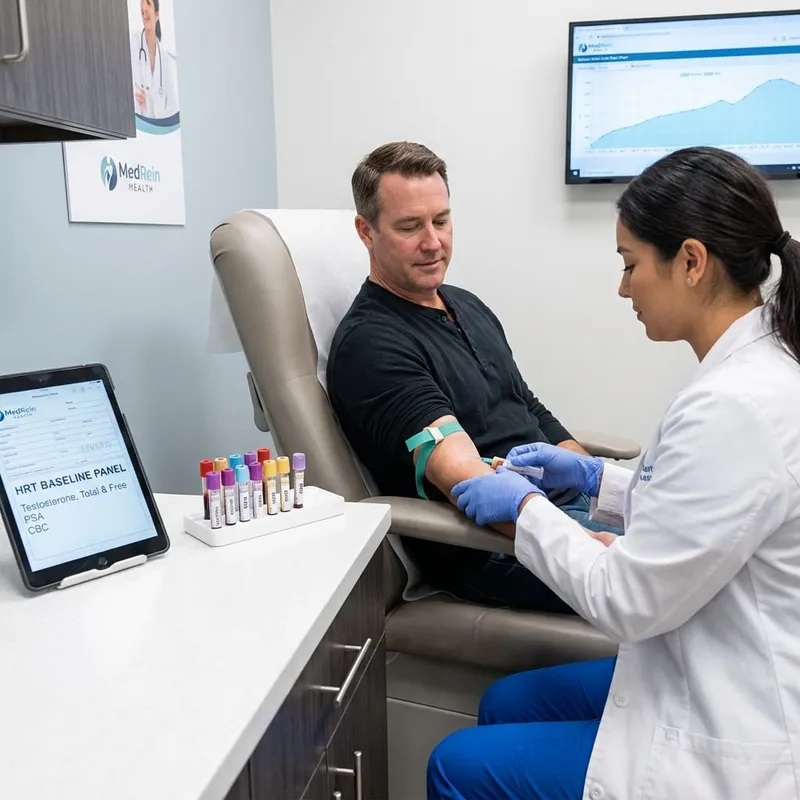
Baseline labs are drawn before any prescription is written. For women, this typically covers hormone levels along with thyroid and metabolic markers. For men being evaluated for testosterone therapy, baseline labs commonly include testosterone, liver and kidney function, lipid panels, and other markers used to establish a starting point. Your physician reviews these results with you as part of the consultation.

How often is follow-up bloodwork needed once I start HRT?

Follow-up intervals vary by protocol, but a common pattern is a recheck in the first four to eight weeks, another at around twelve weeks, and then periodic monitoring after that once dosing is stable. Your physician sets the specific schedule based on your labs, your delivery method, and how you are responding.

What is the difference between bioidentical and synthetic hormones?

Bioidentical hormones are compounded to match the molecular structure of the hormones your body produces, and dosing is based on your individual lab work. Synthetic hormones are chemically different compounds available in fixed dose increments. Which option, or combination, fits your situation is something your physician determines from your labs and health history.

Can HRT be combined with other treatments at Medrein Health?

Yes, HRT is sometimes paired with other services such as peptide therapy or medical weight loss as part of a broader plan, coordinated by your physician so your labs and monitoring schedule account for everything you are doing. A consultation is where that combined plan gets built.

A protocol built on labs, not guesswork

Every HRT protocol at Medrein Health & Aesthetics starts with baseline lab testing and follows a defined monitoring schedule, reviewed by a physician at each step. These articles walk through what gets tested and when, so you know what the process looks like before your consultation.

Made by FOMO.ai