Hair Restoration with PRP/PRF, Laser, or Medication in Southlake, TX
Hair thins for different reasons. We find out why yours is thinning in Southlake, TX, then treat that cause rather than the symptom.
- Google 4.8★
- Yelp 5.0★
Three ways to treat thinning hair
Each one works on the follicle a different way: PRP/PRF injects your own growth factors, HaiRestart uses laser warmth to raise blood flow, and medications work on the hormone side. Hair thins for different reasons, so which one you start on follows from what is causing yours, and it can run with a Peptide Therapy plan.
PRP/PRF Hair Restoration
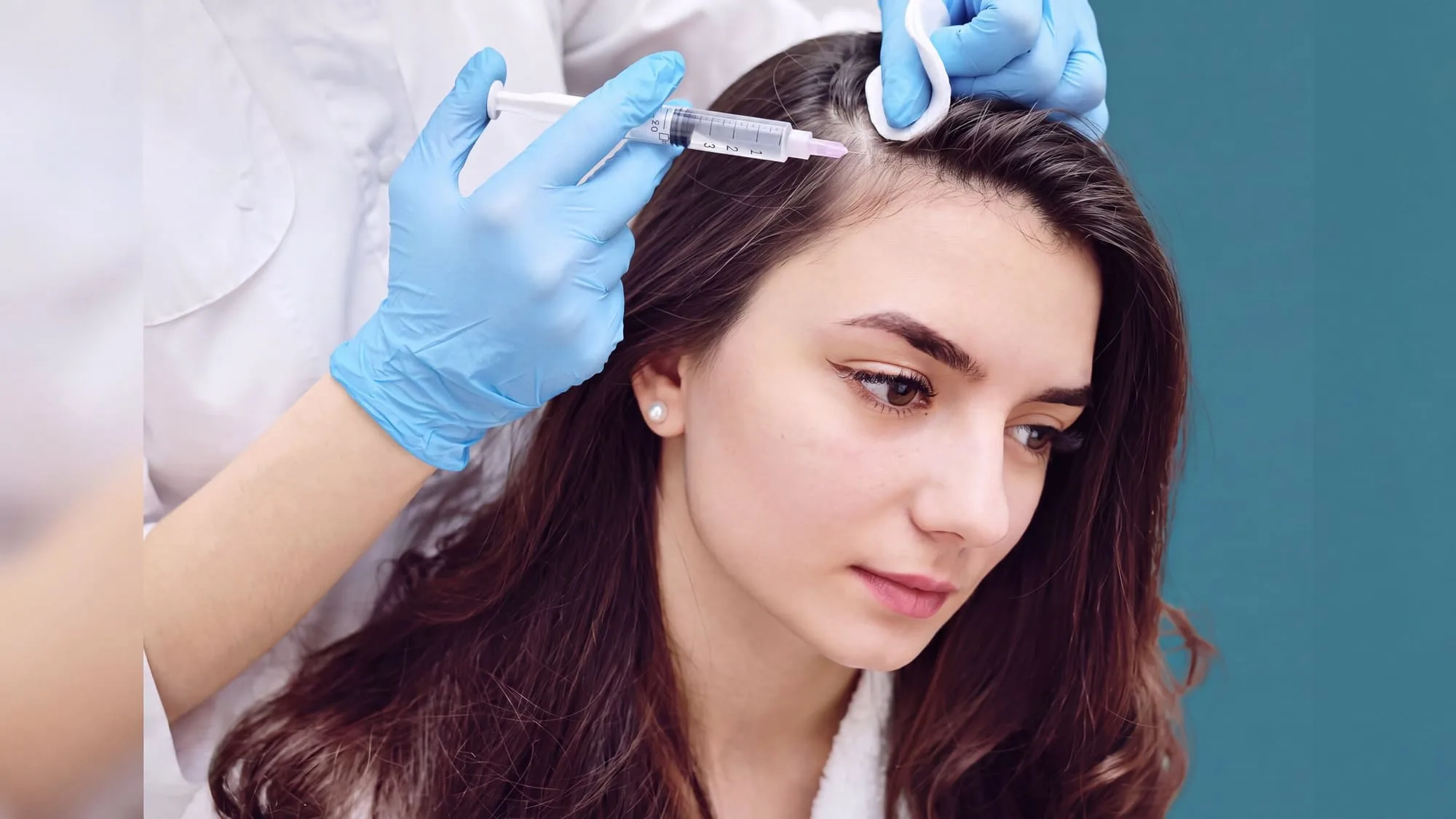
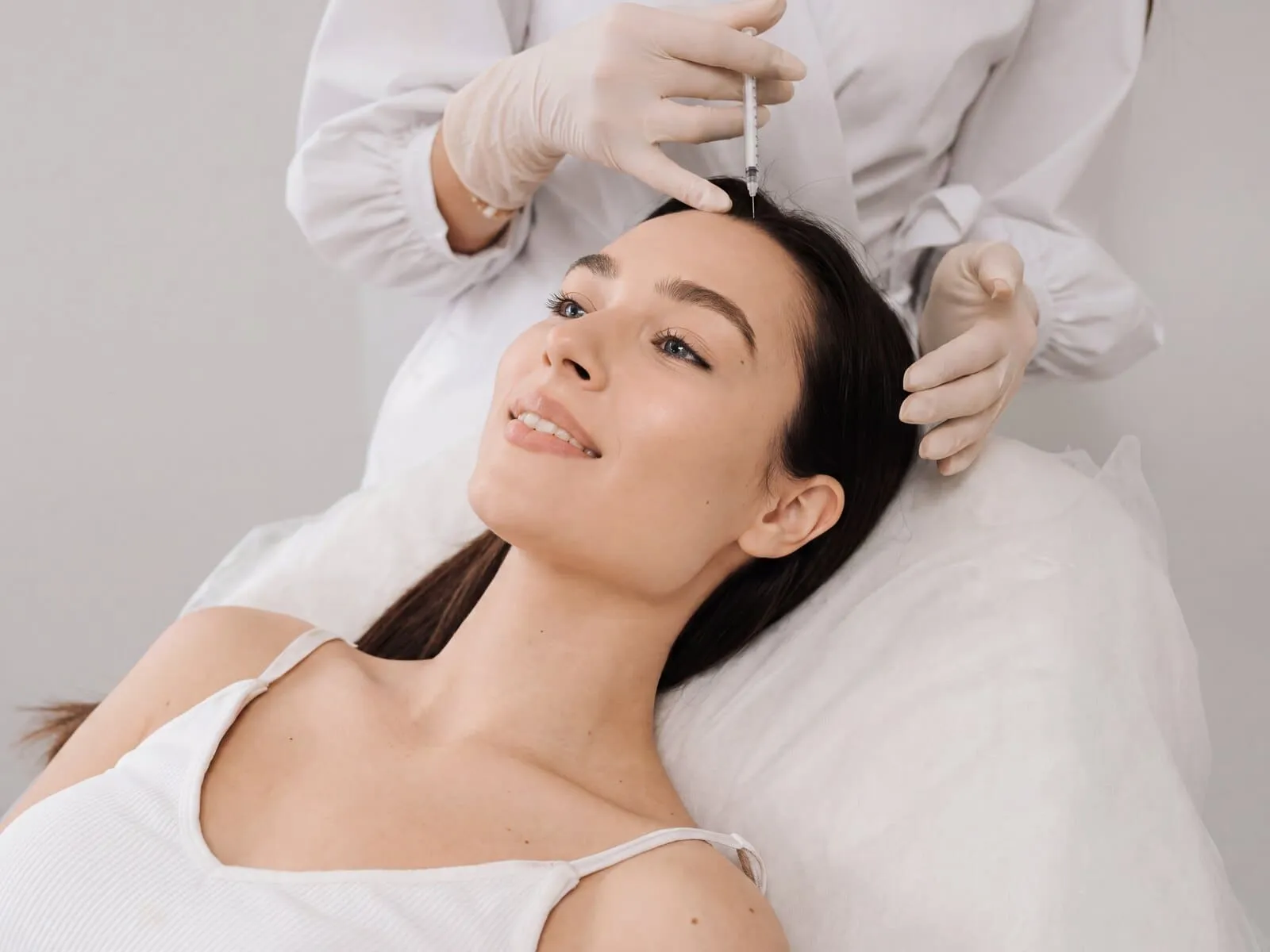
We take a small vial of your blood, spin it to concentrate the growth factors in it, and inject those back into your scalp to wake up the follicles. PRF is the more concentrated of the two.
HaiRestart
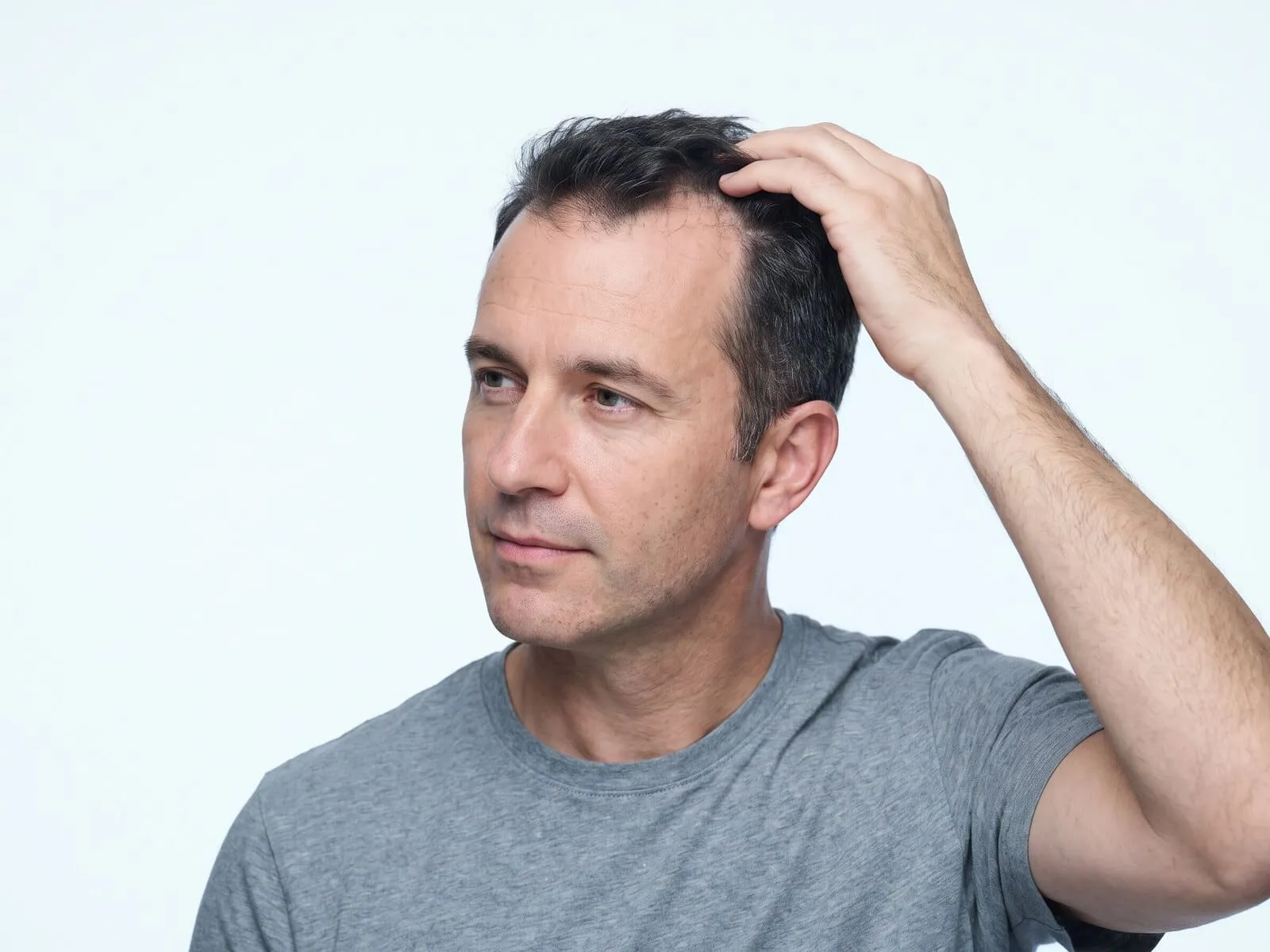
A laser passed over the scalp on the Fotona SP Dynamis platform. The warmth is meant to increase blood flow to the follicles and get resting ones growing again. No needles, and it can run on its own or alongside PRP/PRF.
Hair Loss Medications
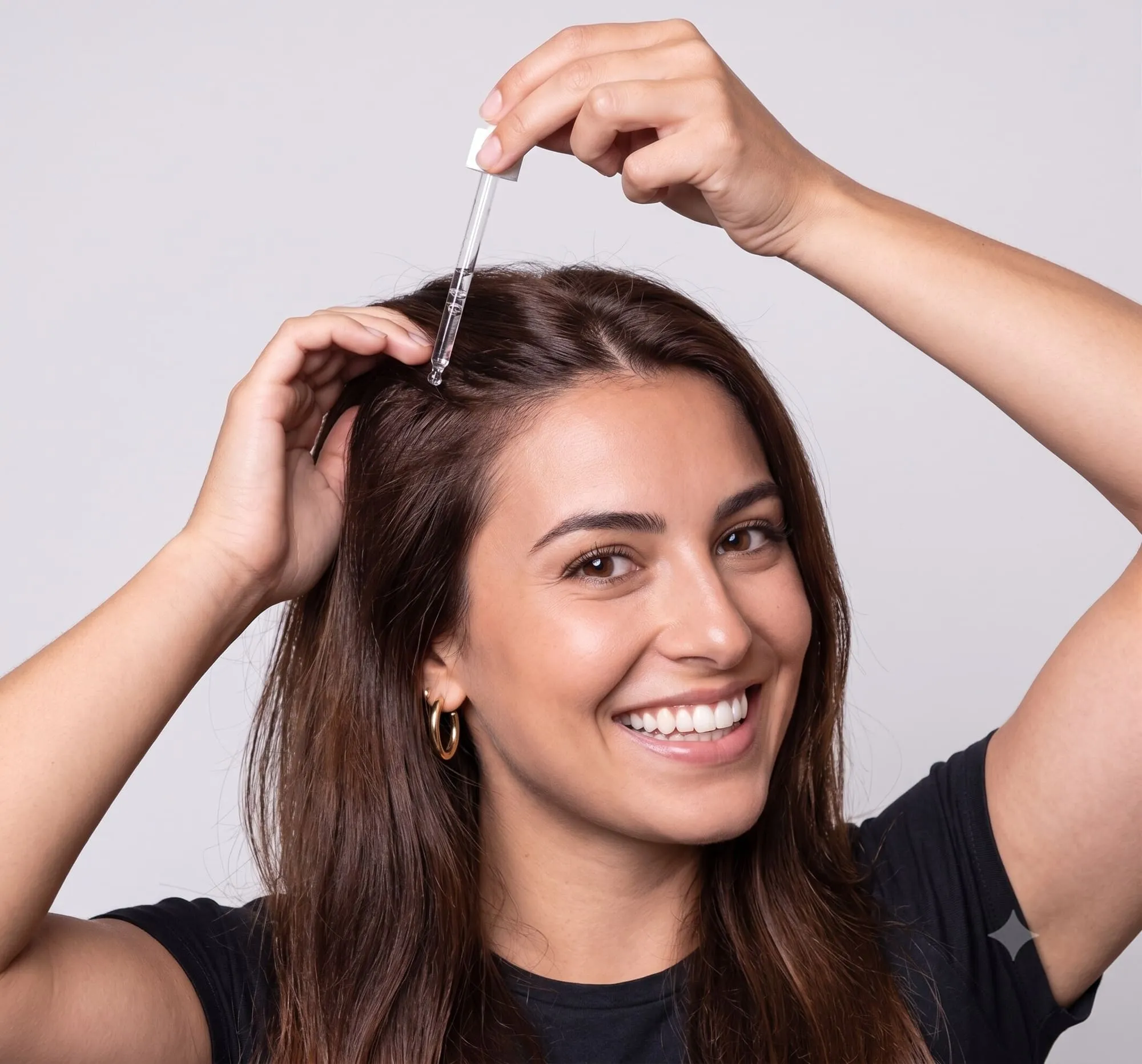
Daily prescription treatment: minoxidil to keep follicles in their growth phase, or finasteride, dutasteride and spironolactone to blunt the hormone that shrinks them. Which one depends on why your hair is thinning.
What causes hair loss
Hair thins for five broad reasons, and they do not respond to the same treatment. Identifying which one is yours is the whole of the first appointment — a genetic pattern, a thyroid, an iron level and a course of medication each leave a different signature on a scalp, and treating the wrong one costs months.
The types of alopecia we see
"Alopecia" is a category, not a diagnosis. Some of these are temporary and resolve on their own; some are scarring, which means the follicle is being replaced by scar tissue and time genuinely matters. Dr. Mikki reads which one you have before recommending anything.
-
Androgenetic alopecia
Male and female pattern hair loss, driven by hormones and genetics. The most common type, and the one the grading scales below describe.
-
Alopecia areata
An autoimmune condition that causes patchy loss, often in defined round areas rather than across the whole scalp.
-
Telogen effluvium
Temporary shedding after stress, illness, surgery or a nutritional shortfall. Diffuse rather than patterned, and usually reversible.
-
Postpartum alopecia
The shedding that follows childbirth as hormone levels fall back. A form of telogen effluvium, and self-limiting in most cases.
-
Anagen effluvium
Loss during the active growth phase, most often caused by chemotherapy or another systemic treatment.
-
Traction alopecia
Caused by repeated pulling — tight braids, extensions, ponytails. It is preventable, and it becomes permanent if the traction continues.
-
Frontal fibrosing alopecia (FFA)
A scarring alopecia that recedes the frontal hairline and often the eyebrows with it. Early recognition matters because scarred follicles do not return.
-
Lichen planopilaris (LPP)
An inflammatory scarring alopecia that destroys the follicle. Treatment is aimed at stopping progression rather than regrowing what is gone.
-
Central centrifugal cicatricial alopecia (CCCA)
A scarring alopecia beginning at the crown and spreading outward, most common in women of African descent.
-
Cicatricial (scarring) alopecia
The umbrella term for hair loss where the follicle is replaced by scar tissue. This is the group where a diagnosis is urgent rather than optional.
How hair loss is graded
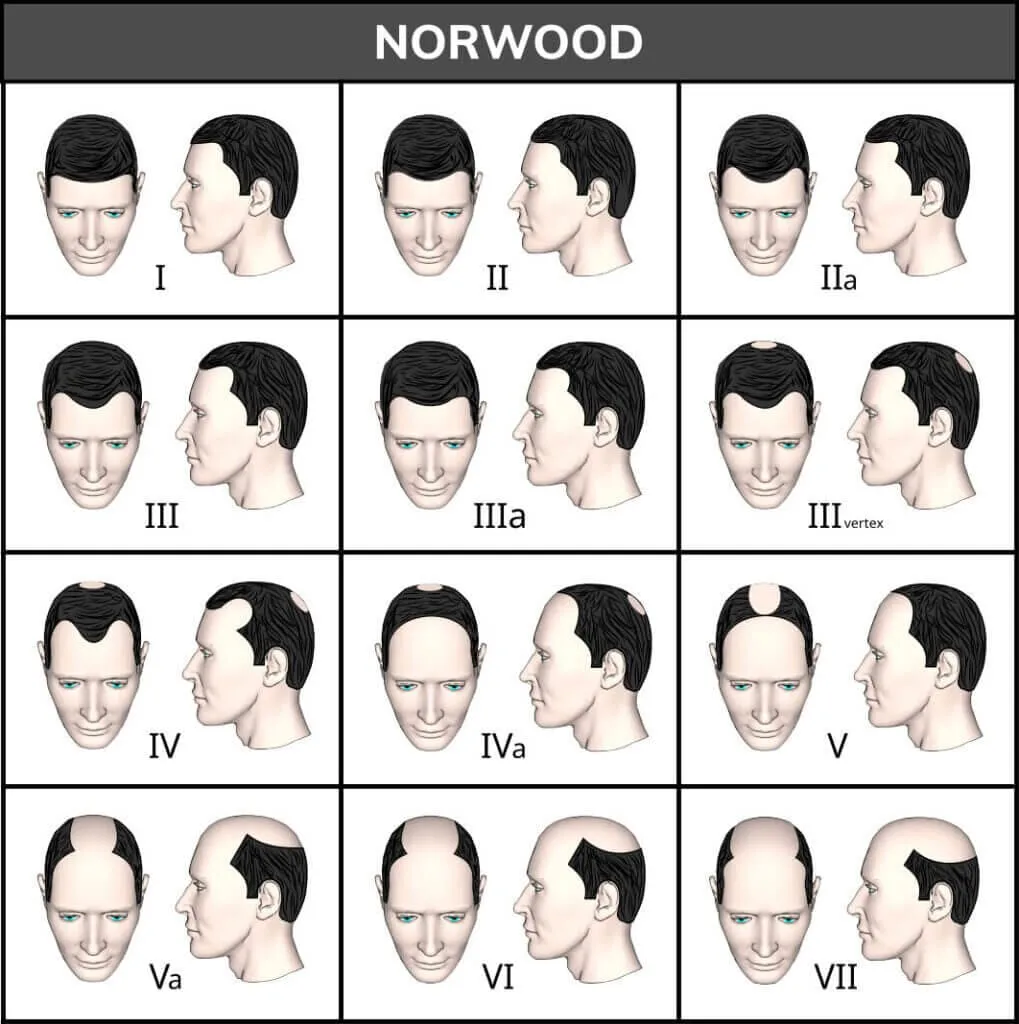
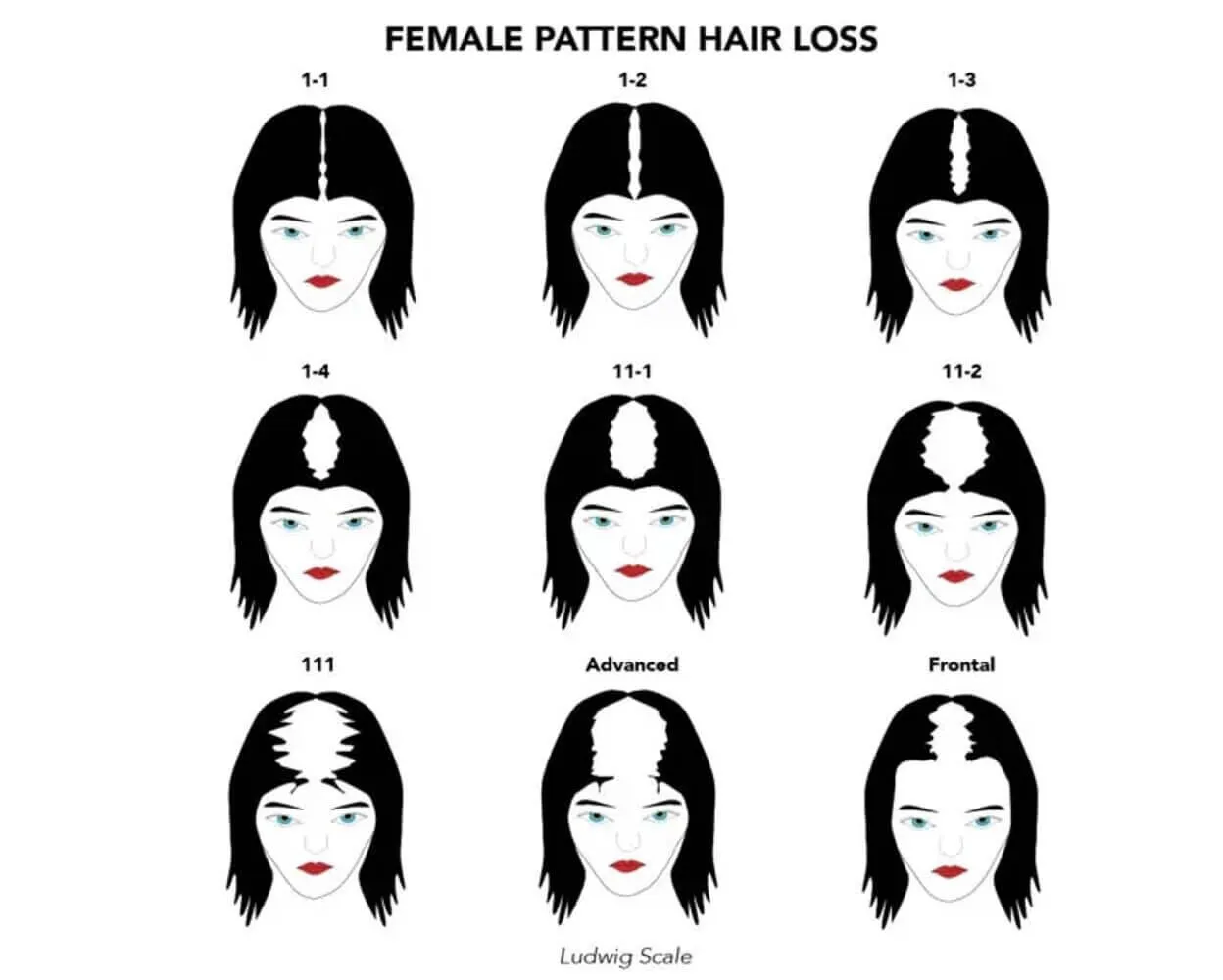
Pattern hair loss is staged on two standard scales — the Norwood-Hamilton scale for men and the Ludwig scale for women. They exist so that progression can be tracked against something fixed rather than against a memory of last year, and so that two clinicians describing the same scalp use the same word.
Norwood-Hamilton scale (men)
Stages I to VII, running from minimal recession at the temples through crown thinning to a band of hair around the sides and back only.
Ludwig scale (women)
Grade I is perceptible thinning across the crown, Grade II is pronounced widening of the part, and Grade III is full loss within the crown area.
Why finding the cause comes first
Male-pattern loss, thyroid trouble, iron deficiency and stress shedding all look similar in the mirror and respond to different treatments. A mail-order kit just sends you one treatment and never checks which cause is yours.
| Feature | Medrein | Mail-Order Kit |
|---|---|---|
| The cause of your hair loss established first | Included | Not included |
| PRP/PRF, HaiRestart, and medication weighed as one plan | Included | Not included |
| Genuine Fotona platform for HaiRestart | Included | Varies |
| Runs alongside existing Peptide Therapy or HRT | Included | Not included |
Why patients trust the plan behind the treatment
The HaiRestart quote is a real patient review; the second reflects common patient sentiment rather than a verbatim quote. Individual results vary.
After just a few sessions of HaiRestart, I noticed significant hair regrowth and increased thickness. It's truly a game-changer!
One consultation confirmed I was a candidate for PRP before anything got scheduled, no guessing which option to start with.

Frequently asked questions
What treatments make up Medrein’s Hair Restoration category?
Three. PRP/PRF, HaiRestart on the Fotona platform, and medications such as minoxidil and finasteride. Dr. Mikki picks the one that fits you, or combines them.
What is the difference between PRP and PRF for hair restoration?
Both come from your own blood. PRP is platelet-rich plasma. PRF is platelet-rich fibrin and holds roughly ten times the growth factors, so it is the stronger of the two.
What is HaiRestart, and how does it work?
A laser protocol on the Fotona SP Dynamis platform. The laser is meant to stimulate blood flow and follicle activity in the scalp, on its own or alongside PRP/PRF.
Who is a candidate for hair restoration treatment?
It depends on why you are losing hair. Genetics, hormones, nutrition, and stress each leave a different pattern, so Dr. Mikki reads yours first. Results vary.
Can PRP/PRF or HaiRestart be combined with medication?
Yes. Many patients run PRP/PRF or HaiRestart alongside minoxidil, finasteride, dutasteride, or spironolactone. Dr. Mikki sets the combination at your consultation.
How does hair restoration coordinate with Peptide Therapy or HRT?
Dr. Mikki manages all of it, so your hair plan is evaluated against any peptide or hormone therapy you already take.
How do I prepare for a PRP/PRF appointment?
Stop NSAIDs such as ibuprofen and aspirin three days beforehand, and come with a clean scalp and clean hair. Dr. Mikki will tell you at consultation if anything else you take needs pausing.
How quickly do hair loss medications work?
They need consistent daily use. Most people see initial improvement within three months, and noticeable regrowth can take up to six. Stopping early is the most common reason a medication appears not to work. Results vary.
Find out what is causing your hair loss
Dr. Mikki confirms the cause, then tells you whether PRP/PRF, HaiRestart, or medication fits.
4.8★ from 128 verified Google reviews