Laser Tattoo Removal in Southlake, TX
Full tattoo removal, cover-up fading, and eyeliner and cosmetic tattoos, on a genuine Fotona StarWalker MaQX Pro. Your ink and your skin are assessed first, so you know how far it can realistically go.
- Google 4.8★
- Yelp 5.0★
How Picolasers work
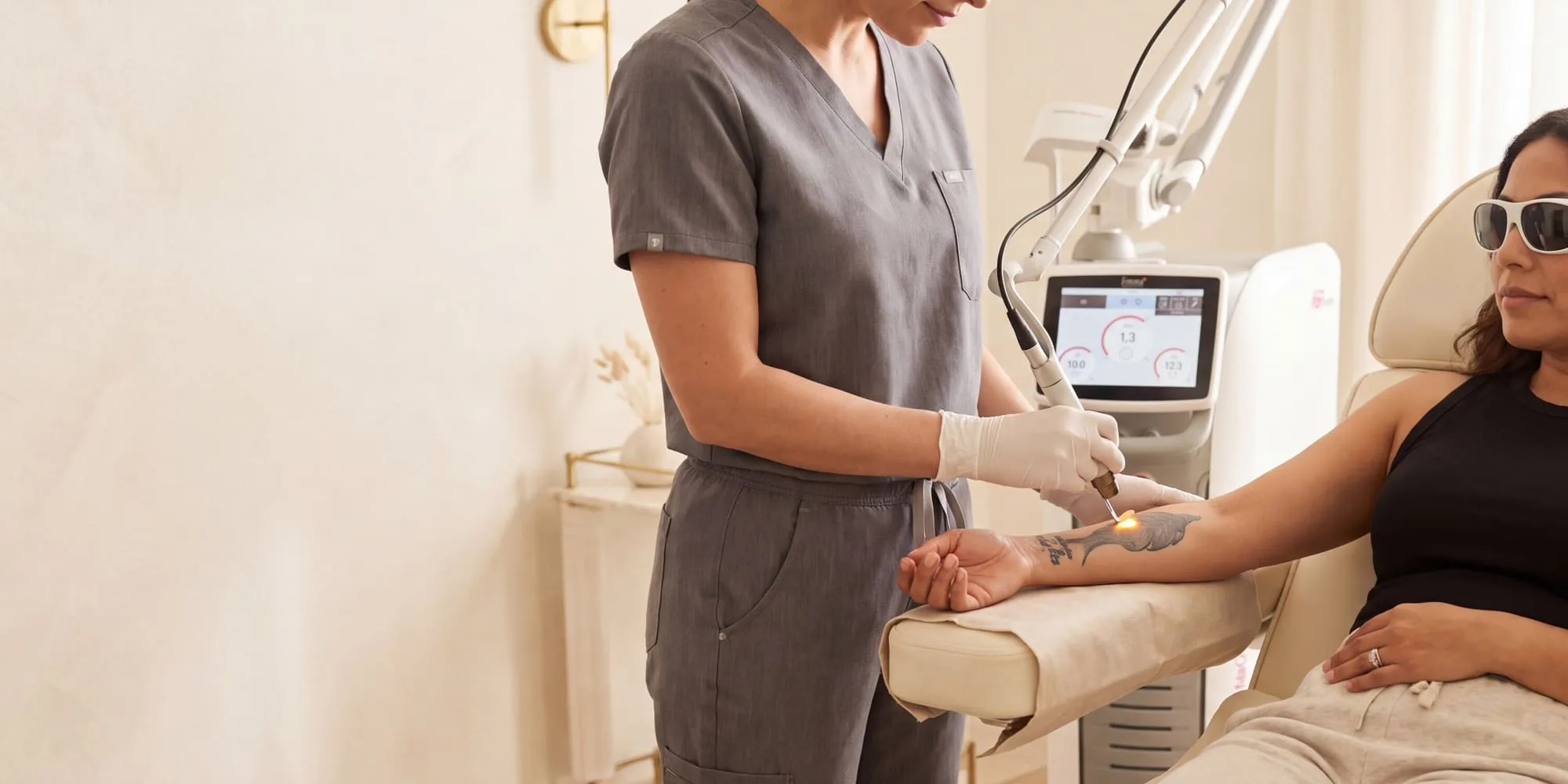
Each Picolaser pulse is over in trillionths of a second — fast enough to shatter ink into particles your body clears on its own. Medrein fires them on a genuine Fotona StarWalker MaQX Pro, the Picolaser on the practice's Fotona Lasers bench. Dr. Mikki reviews your ink and skin, then sets your plan.
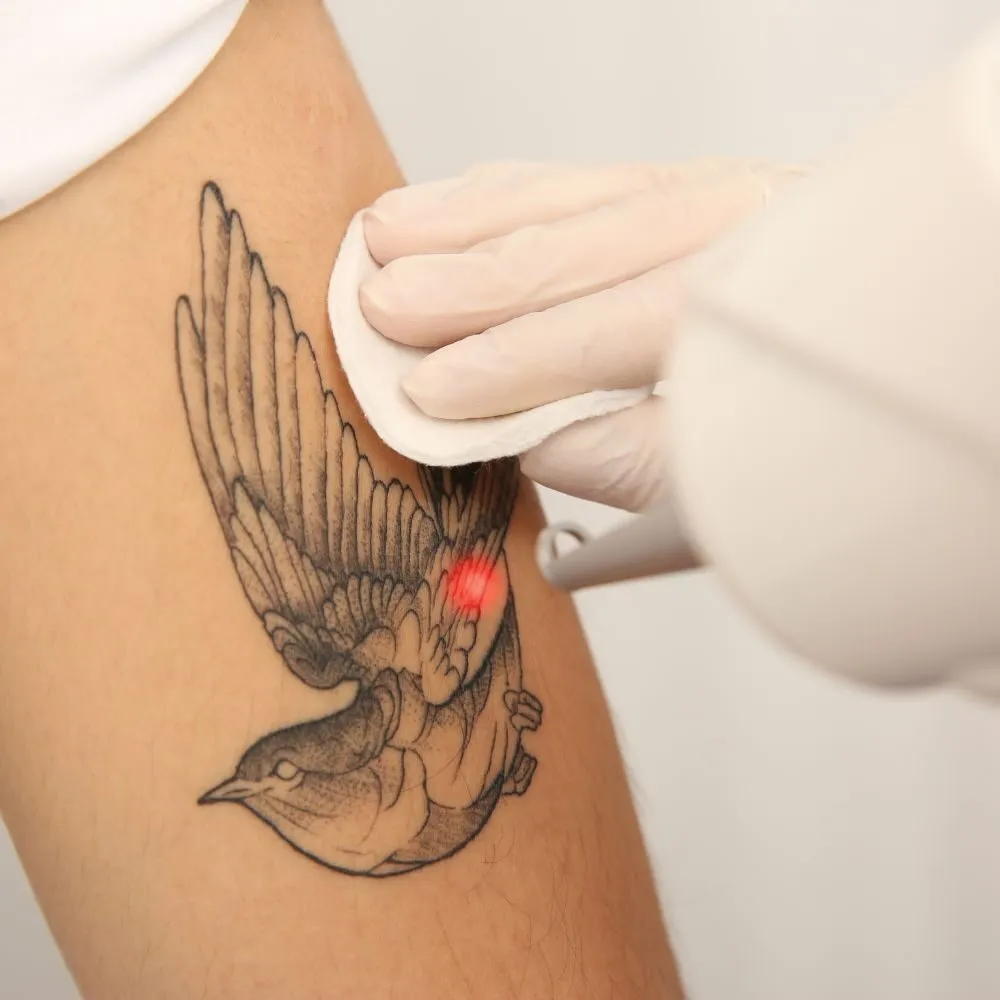
Tattoo removal itself is straightforward to describe: laser light breaks the ink already in your skin into particles small enough for your immune system to carry away. It is minimally invasive and it is not a single appointment — the size of the tattoo, the colours in it, and how deep the ink sits are what decide how many sessions it takes.
What your session plan depends on
What laser removal at Medrein involves
- It is minimally invasive. There is no incision and no excision — the light does the work through intact skin.
- It is precise. The pulse is tuned to the ink rather than the skin around it, so surrounding tissue is spared.
- It treats the common ink colours, including black, blue, green and red. Darker inks clear fastest; lighter ones usually need a longer plan.
- It treats amateur and professional tattoos alike, and cosmetic tattoos as well.
- It does not require anesthesia. Most patients sit the session without it, and comfort options are discussed beforehand.
How the laser clears ink
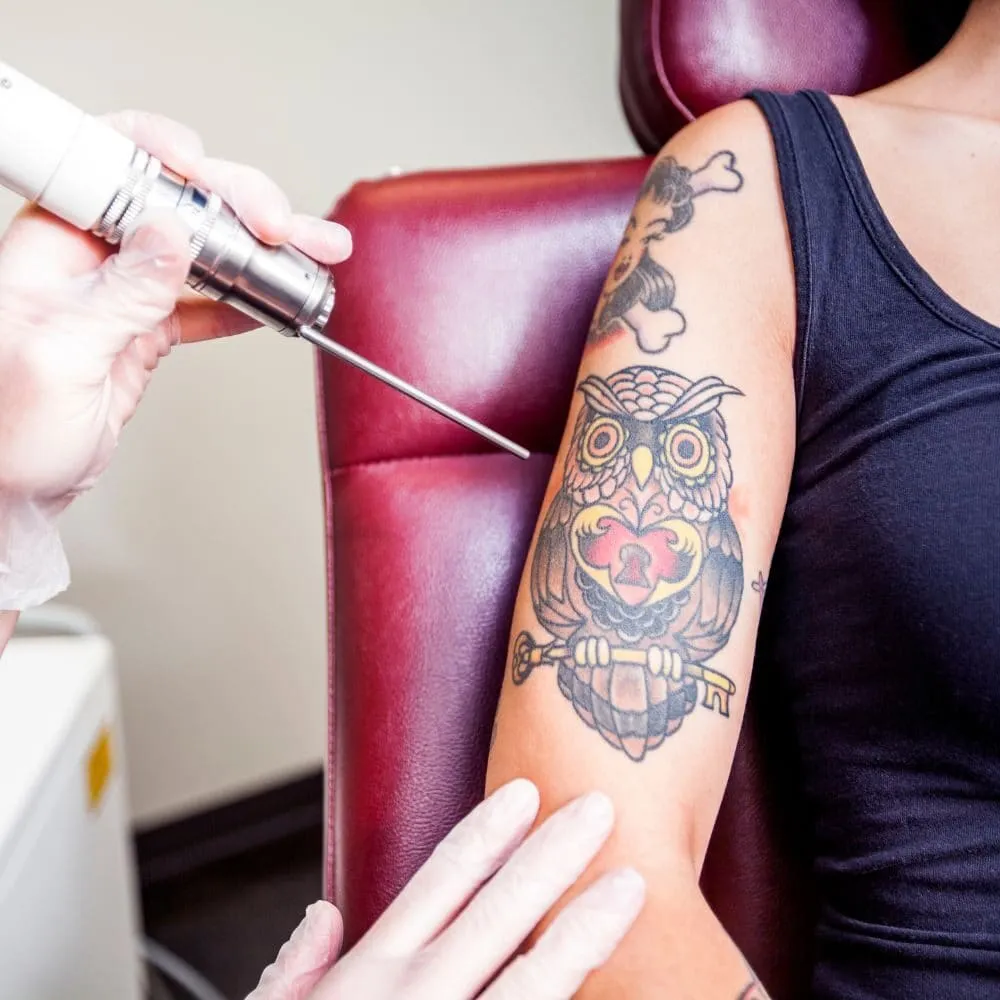
A removal session on the StarWalker runs in two passes, and the first one is what makes the second safe to run hard.
FracTAT: ablative fractional pre-conditioning
A fractional pass first drills micro-channels down toward the depth the ink sits at. Pre-conditioning the skin this way lets the removal pass run at a higher fluence safely, because the pressure and gas the next step generates has somewhere to vent instead of building under intact skin.
Q-switched Nd:YAG or KTP: the removal pass
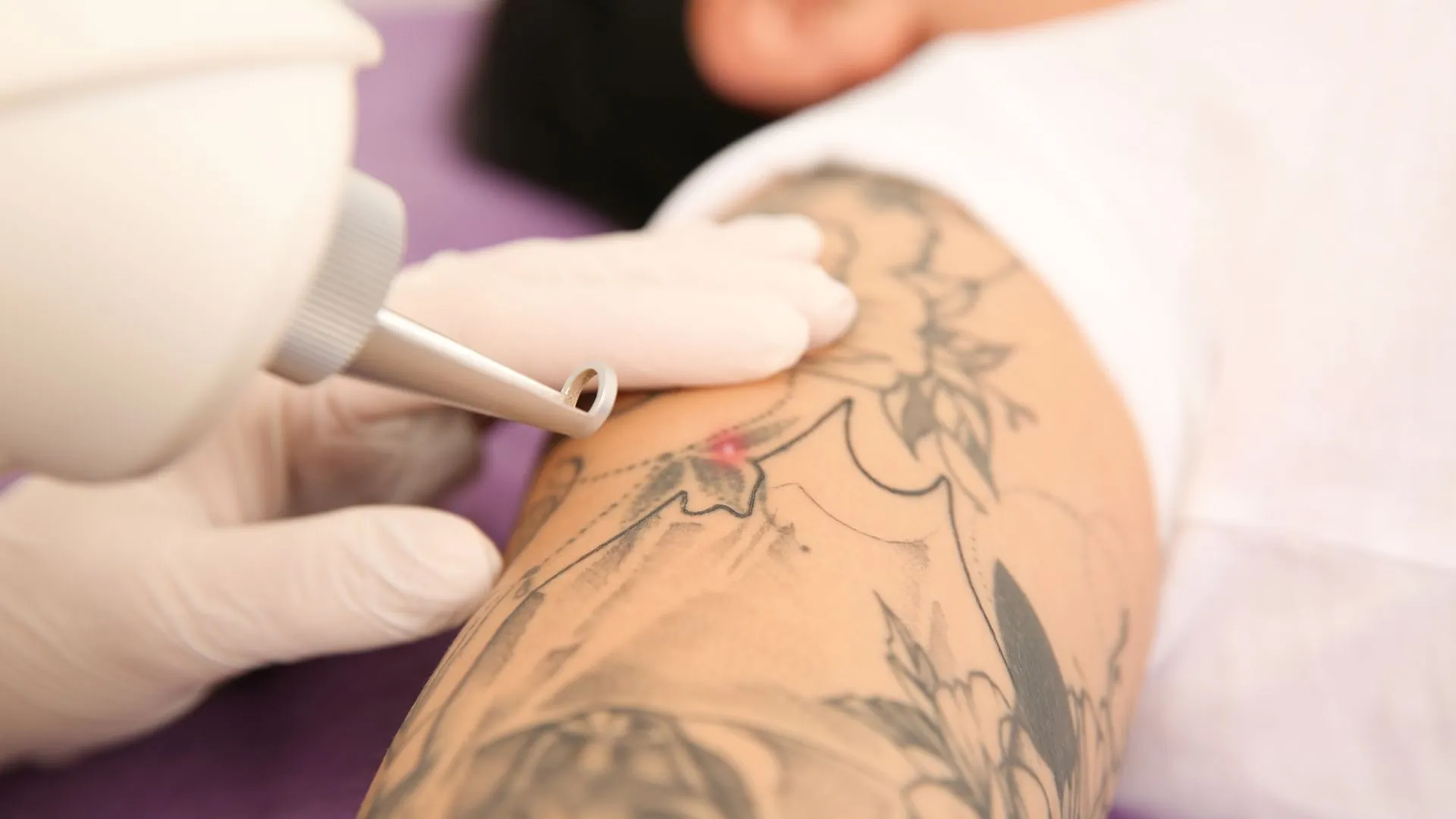
Short, high-power pulses pass through the upper layers of skin and are absorbed by the ink itself. The absorbed light converts to photoacoustic waves that fragment the pigment mechanically, and your immune system clears the fragments over the weeks that follow.
What a genuine Picolaser changes
Tattoo-removal lasers are not all the same generation. Here's how the genuine Fotona StarWalker compares with an older Q-switched laser.
| Feature | Medrein (Picolaser Platform) | Older Q-Switched Laser |
|---|---|---|
| Ultra-short picosecond pulses fragment ink into finer particles | Included | Not included |
| Treats a broad range of tattoo ink colors | Included | Varies |
| Candidacy assessed across a range of skin tones | Included | Varies |
| Calibrated for delicate eyeliner & cosmetic-tattoo removal | Included | Not included |
Permanent makeup removal
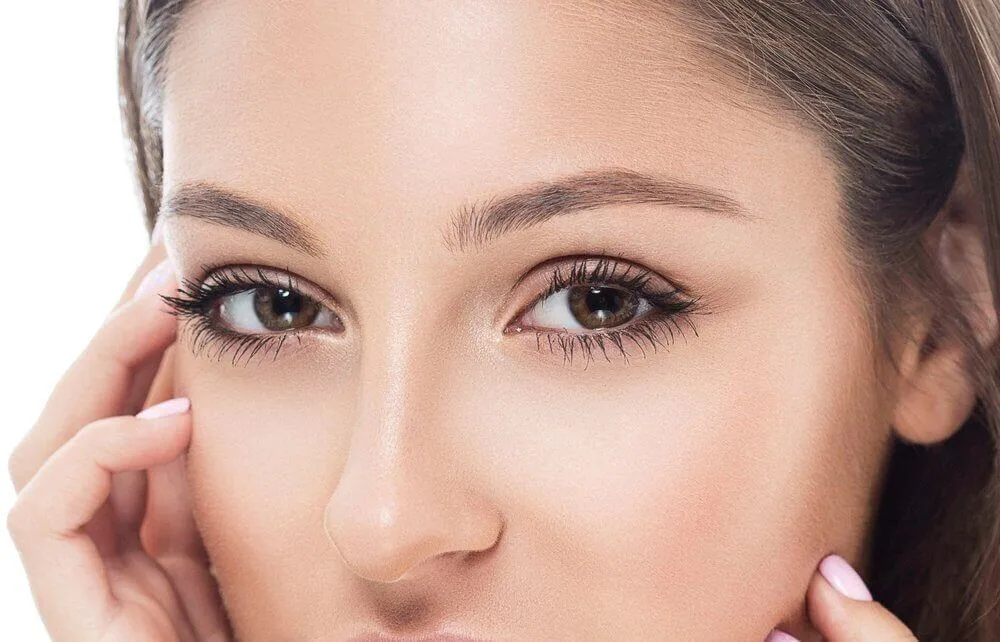
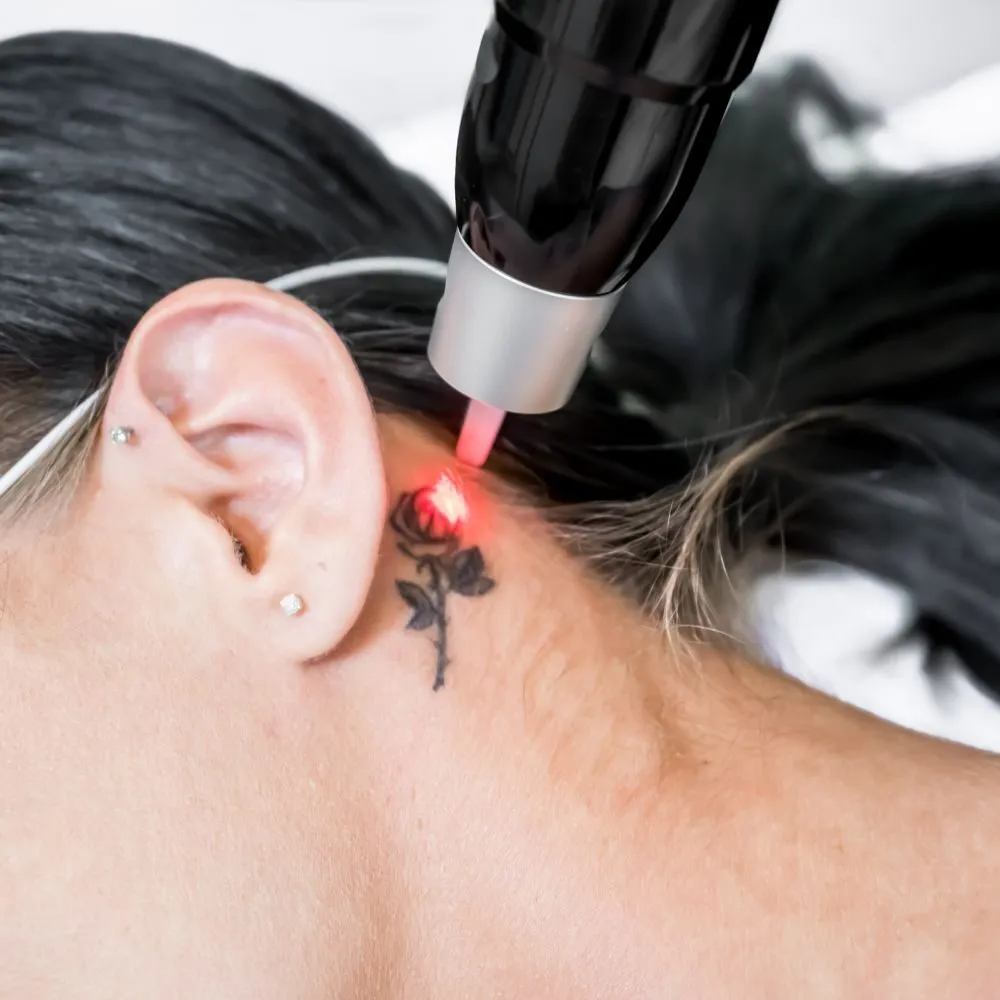
Cosmetic tattoos sit on delicate facial skin, so the approach is built around precision and skin integrity rather than speed. Whether it is eyeliner, eyebrow microblading, or lip blush, each session is set to your skin type, the pigment colour, and the area being treated.
- Eyeliner removal
- Upper or lower lip pigment, makeup or tattoo removal
- Microblading (eyebrow tattoo) removal
Safety comes first
- Corneal shields protect your eyes throughout eyeliner tattoo removal.
- The lasers are calibrated for cosmetic ink, which behaves differently from traditional tattoo ink.
How many sessions, and how long each one takes
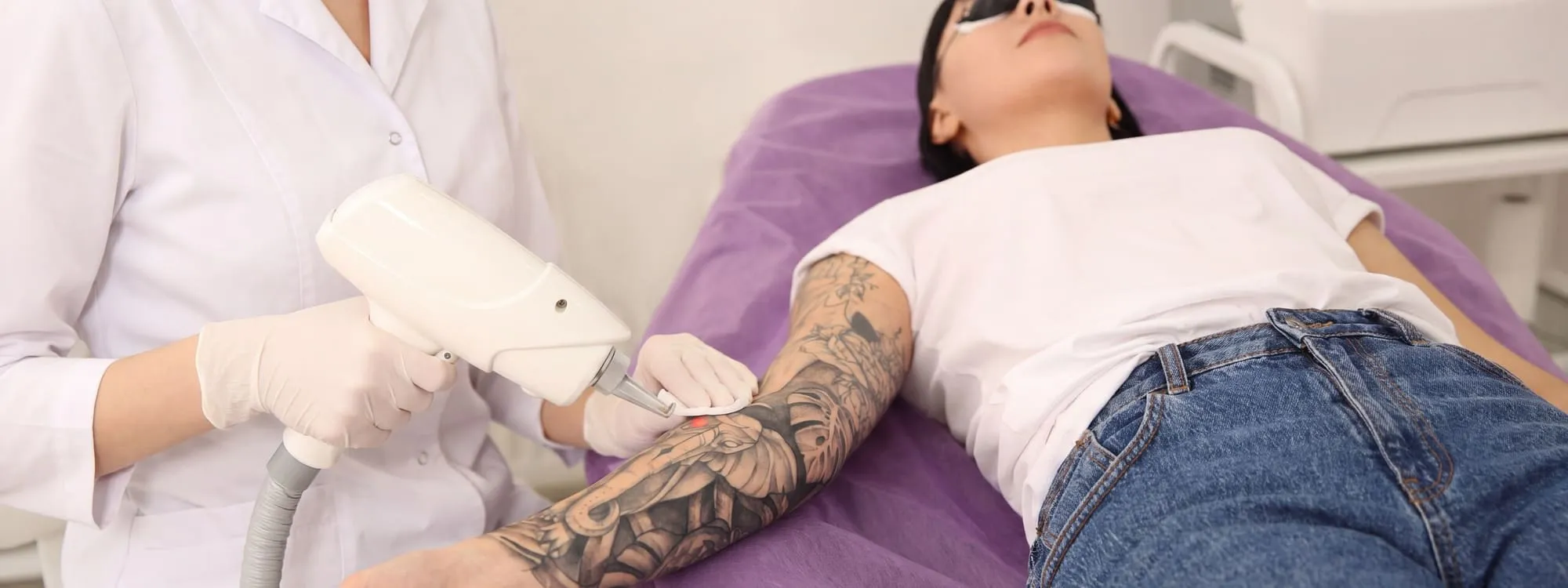
A single appointment usually runs 10 to 30 minutes, depending on how large and how complex the tattoo is. The course is the part worth planning for: sessions sit several weeks apart, because the clearing happens between them rather than during them.
Most tattoos need somewhere between 5 and 15 sessions for significant fading or complete removal, and that range moves with the tattoo's size, its colours, the type of ink, and your own skin. End to end, a complete removal commonly spans several months to over a year. Dr. Mikki gives you the estimate for your specific tattoo at consultation rather than a number off a chart.
How to prepare for your treatment
Start with a consultation
Dr. Mikki assesses the tattoo — ink colours, depth, placement, your skin — and explains which approach fits it and roughly how many sessions it is likely to take.
Tell us what you take
Medications, supplements, allergies and medical conditions all matter here — some of them change the settings, and a few change whether it is safe to treat at all.
Ask about comfort options
Numbing cream and other comfort measures can be arranged in advance. Raise it at the consultation rather than on the day, so there is time for it to work.
Plan the spacing, not just the session
Sessions sit several weeks apart because the clearing happens between them. Booking the series with that spacing in mind is most of what makes a plan work.
Stay out of the sun beforehand
Avoid sun exposure and tanning beds in the run-up to your session. Recently tanned skin changes how the laser is absorbed and can force settings to be dialled back.
Come with clean skin
No lotion, oil, or makeup on the area on the day. Shave it if there is hair — hair between the handpiece and the ink gets in the way of the pass.
Safety, and what your skin does afterward
Why laser removal is the safer route
- Nothing is cut. The light works through intact skin, so there is no incision and no excision anywhere in the procedure.
- The pulse is tuned to the ink rather than to the skin around it, which is what spares the surrounding tissue.
- Scarring is possible, but considerably less likely than with surgical excision of the same tattoo.
- Most patients sit the session without anesthesia. Numbing cream and other comfort measures can be arranged in advance.
- Settings are matched to your skin rather than applied uniformly, which matters most on deeper skin tones.
What happens after a session
- Redness and swelling over the treated area are normal, and they are how the session ends rather than a sign something went wrong.
- Blistering or scabbing can happen while the area settles. It is part of how the body clears fragmented ink.
- Most patients go straight back to their day; the downtime is the reaction, not a recovery period off your feet.
- Aftercare instructions are given at every session, and they matter more than anything you do on the day.
- The fading happens between appointments rather than during them, so the result of a session shows up weeks later.
- Individual results vary, and nothing here is a guarantee that a particular tattoo will clear completely.
Is laser tattoo removal right for you?
Dr. Mikki reads your ink, your skin and your medical history at consultation and tells you what your particular tattoo can realistically do — on the same Picolaser platform the clinic treats pigment on.
A good fit
- You want a tattoo gone, or faded far enough that a cover-up sits cleanly over it.
- Your tattoo is amateur, professional or cosmetic — all three are treated here, and eyeliner and microblading with them.
- Your ink is mostly black or another dark colour, which is what responds fastest to a picosecond pulse.
- You would rather not have the tattoo cut out, and you want the option with the lower scarring risk.
- You can commit to a series spaced several weeks apart rather than a single appointment.
Not yet, or not this
- You need it gone before an event in a few weeks. Complete removal usually spans several months to over a year.
- You have been in the sun or on a tanning bed recently — freshly tanned skin changes how the laser is absorbed and forces the settings down.
- Your tattoo is entirely light-coloured. Red, green and blue can be treated, but they ask for a longer plan than black does.
- You cannot tell us what you take. Medications, supplements, allergies and medical conditions change the settings, and a few change whether it is safe to treat at all.
Before you book, three things worth knowing
Removal is a course, not an appointment — sessions sit several weeks apart because the clearing happens in between. Cost is quoted per session at consultation, since it turns on your tattoo's size, ink and the number of sessions your plan calls for. And how far a given tattoo goes depends on its ink and on your skin, so ask for the honest read before the first pass rather than after it. Individual results vary.
Why patients choose laser over the alternatives
Transformation: before & after
Each pair holds one tattoo before removal beside the same skin afterwards, every one a different design, ink and skin. How far a specific tattoo can go is a question Dr. Mikki answers by looking at it — these show what the platform has done, not what yours will do.
Scroll the row sideways for the rest.
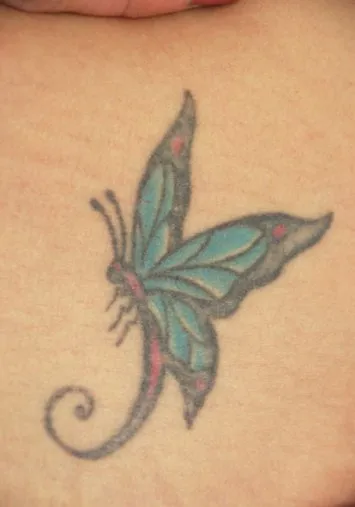
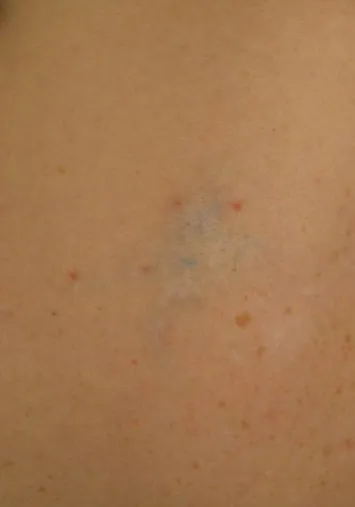
A teal and black butterfly with a long trailing swirl, set on the lower back.
Coloured ink needs the wavelength that matches it, which is why the platform carries four.
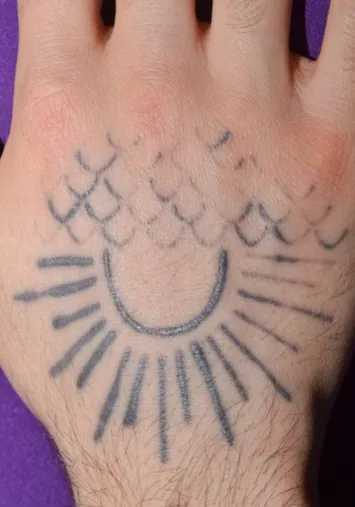
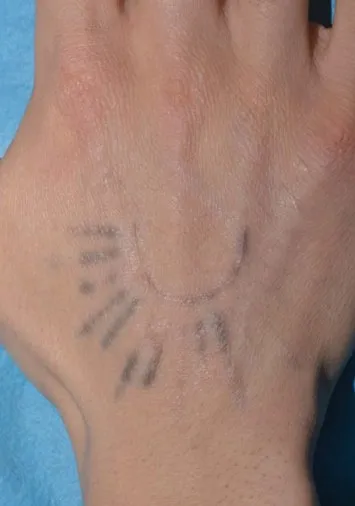
A solid black sunburst with a band of scalework, covering the back of the hand.
Hands clear more slowly than the trunk, because the circulation that carries ink away is poorer there.
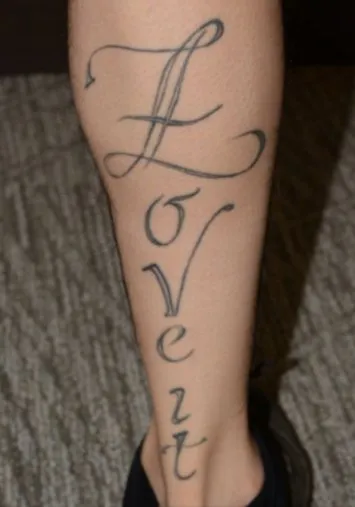
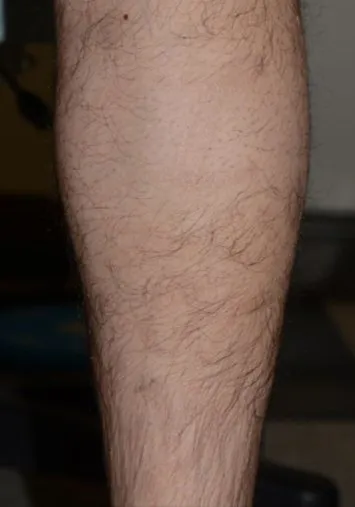
Black script running the length of the calf, letters an inch and more tall.
Large black work is treated in passes across the whole piece, not letter by letter.
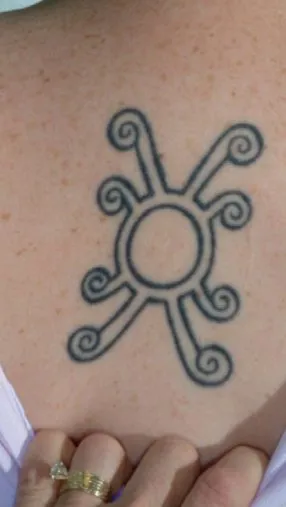
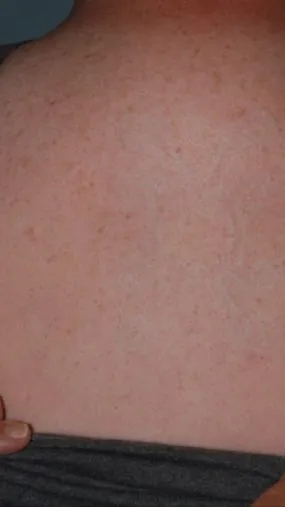
A black sun symbol with spiral rays, set between the shoulder blades.
Dense black line work is the ink a picosecond pulse breaks up most efficiently.
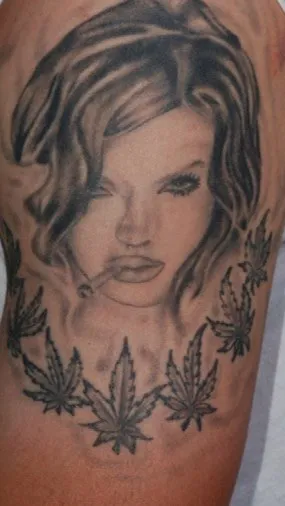
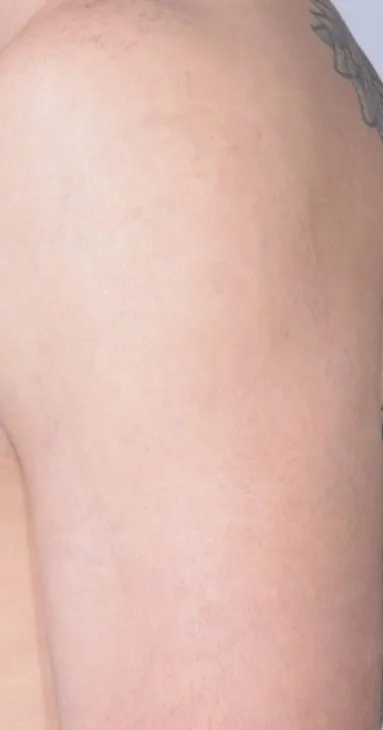
A large black-and-grey portrait piece with leaf work below it, wrapping the upper arm.
A piece this size is a course, and the course length is what the consultation settles.
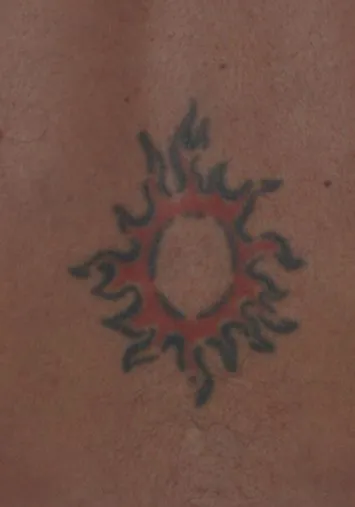
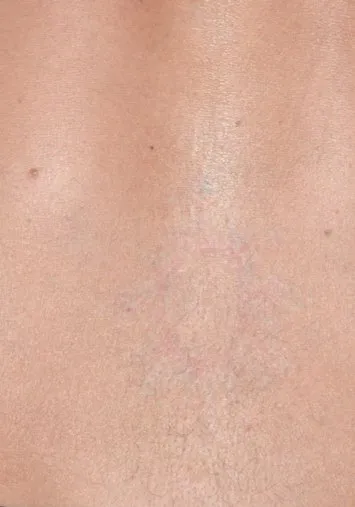
A black tribal sun with red filling the space behind it, on the lower back.
Red is one of the harder inks, and it is treated on its own wavelength.
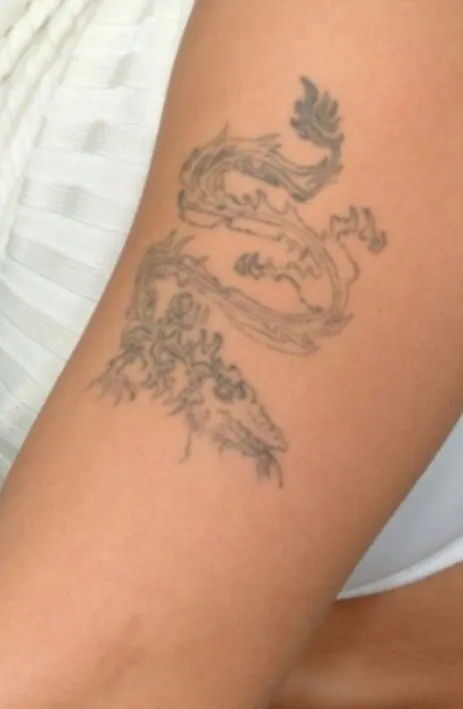
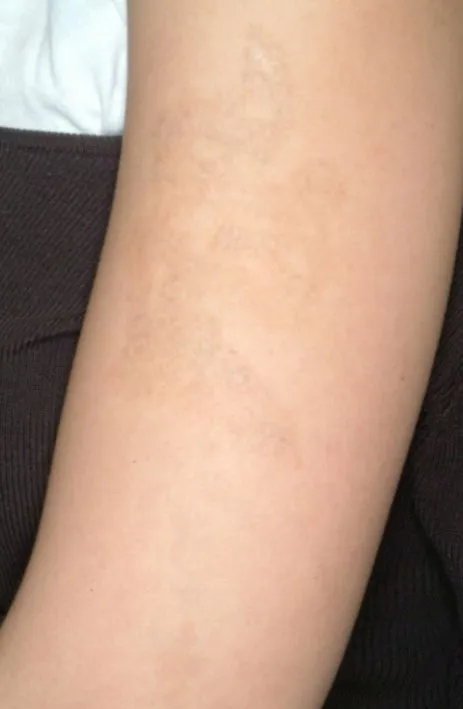
A fine black dragon outline running down the inside of the upper arm.
Fine outlines can clear in fewer sessions than solid fills of the same size.
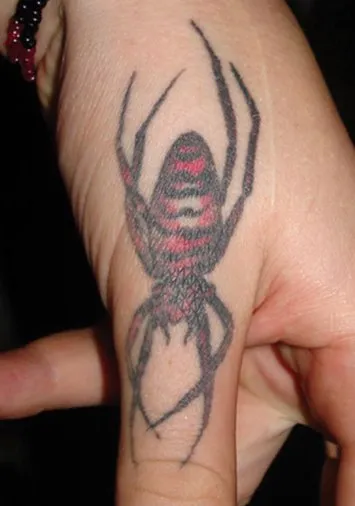
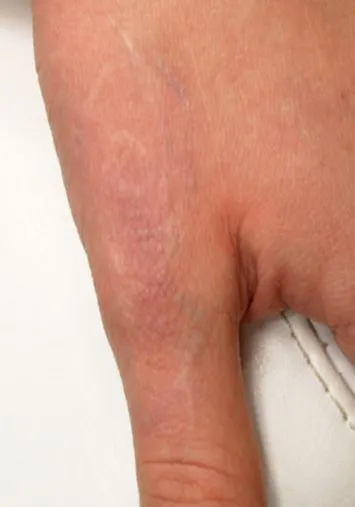
A black and red spider spanning the back of the hand and the base of the thumb.
Two ink colours in one piece means two wavelengths across the same passes.
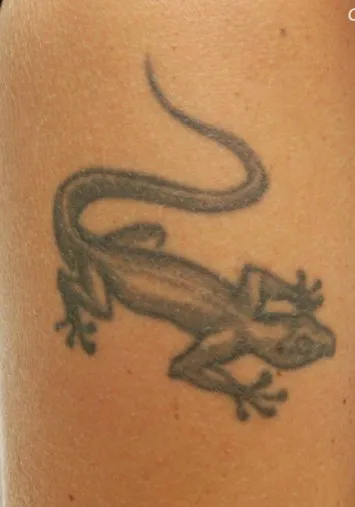
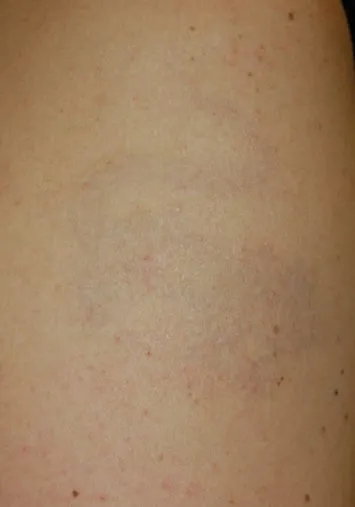
A grey lizard with a long curling tail, on the outside of the upper arm.
Grey wash lifts evenly when the pulses are spaced to let the skin settle between them.
Individual results vary. Number of sessions, degree of clearing, and healing all depend on the tattoo and on your skin.
Who is doing the work
Removal at Medrein is physician-led. Dr. Mikki and her team take on tattoos other clinics have already tried and left, including cosmetic ink on the face, and the platform is a genuine Fotona picosecond system rather than a clone. What that buys you is a plan built for your ink instead of a package, run with as little discomfort and as short a recovery as the treatment allows.
Why patients bring their removal here
These reflect common patient sentiment rather than verbatim quotes, and individual results vary.
I'd tried removal somewhere else years ago and it barely faded. Coming here, Dr. Mikki actually looked at the ink and explained why a real picosecond laser handles it differently, then set a plan around fading it enough for a cover-up instead of chasing complete removal. Results may vary, but finally having a straight answer was worth the drive.
They removed my old eyeliner tattoo, which I couldn't find anyone else willing to touch.

Frequently asked questions
Does laser tattoo removal hurt?
Most patients describe a brief snapping or mild burning sensation as each picosecond pulse fires. It’s tolerable for most people without anesthesia, and comfort options can be discussed at your consultation.
How many sessions will I need?
It varies by tattoo size, ink colors, depth, and your skin, so there’s no fixed number that applies to every tattoo. Dr. Mikki reviews your specific ink at consultation and sets a session plan and spacing from there.
Can every tattoo color be treated?
Black and other dark inks typically respond fastest to the Picolaser platform. Lighter colors like red, green, and blue can still be treated but usually need a longer plan. Your color mix is assessed at consultation.
Is complete removal always possible, or is fading for a cover-up an option?
Both are real options, and they’re not the same plan. Some tattoos fade enough for a strong cover-up in fewer sessions than complete removal requires. Dr. Mikki discusses which goal fits your tattoo and timeline before you book a series.
Do you remove eyeliner and other cosmetic tattoos?
Yes, including eyeliner, lip liner, and microblading (eyebrow tattoo) removal. This is delicate, near-the-eye work that many med spas don’t take on; the laser is calibrated for cosmetic ink and protective eye shields are used throughout.
How is pricing handled?
Tattoo removal is priced per session at consultation, since cost depends on your tattoo’s size, ink, and the number of sessions your plan calls for. Published national averages for laser tattoo removal sit around $423 a session, but that figure is an industry average rather than a Medrein price — call the clinic or book a consultation for a quote specific to your tattoo.
Does tattoo removal leave a scar?
It can, though laser removal is considerably less likely to scar than surgical excision. Whether it does depends on the tattoo’s size and colours, the method used, and how your own skin heals. Dr. Mikki raises the risk for your specific tattoo and skin at consultation rather than after the fact.
Does laser removal damage the skin?
The skin over the tattoo is affected temporarily. Redness and swelling are normal after a session, and blistering or scabbing can happen as the treated area settles. That reaction is part of how the body clears fragmented ink, and it resolves — aftercare instructions are given at every session.
How long before I see results?
Noticeable fading usually begins after a few sessions rather than after the first one, because the clearing happens between appointments and not during them. How quickly it shows depends on the tattoo’s size, its ink, and your skin.
How long does a single session take?
Most sessions run about 10 to 30 minutes, depending on the tattoo’s size and complexity. The full course is the longer commitment — sessions sit several weeks apart, so a complete removal typically spans several months to over a year.
Confirm your candidacy in one visit
Dr. Mikki reviews your tattoo’s ink and your skin, then recommends removal, a cover-up fade, or eyeliner removal.
4.8★ from 128 verified Google reviews