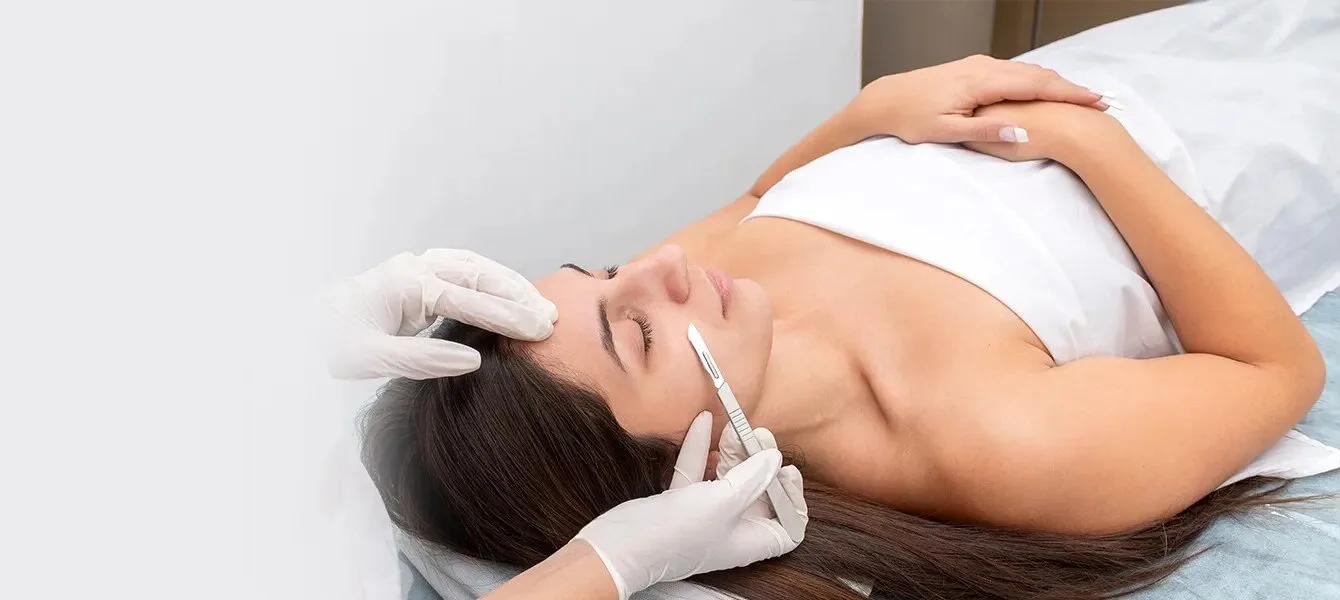
Dermaplaning in Southlake, TX
Dermaplaning uses a sterile surgical blade to remove dead skin and fine facial hair, leaving a smoother finish that takes skincare and makeup more evenly. No numbing and no downtime.
- Google 4.8★
- Yelp 5.0★
A smoother canvas in one visit
Dermaplaning shaves away the top layer of dead cells and the vellus hair that dulls the face, which is what keeps congestion and a flat complexion from setting in. It is one of the simplest of our medical facials, and it is often the first step before a peel so acids and serums reach the skin evenly.
What dermaplaning does for the skin
What dermaplaning improves
One blade pass does two jobs. It improves the skin you have today, and it clears the buildup that would otherwise sit between your skin and the next treatment, which is why dermaplaning is used to prime skin for a HydraFacial, a chemical peel, microneedling or laser resurfacing. Individual results vary.
What it improves
- Reduced appearance of wrinkles
- Reduced appearance of acne scars
- Even skin tone
- Rejuvenated, firmer skin
- Smoother makeup application
- Better skincare absorption
What it primes skin for
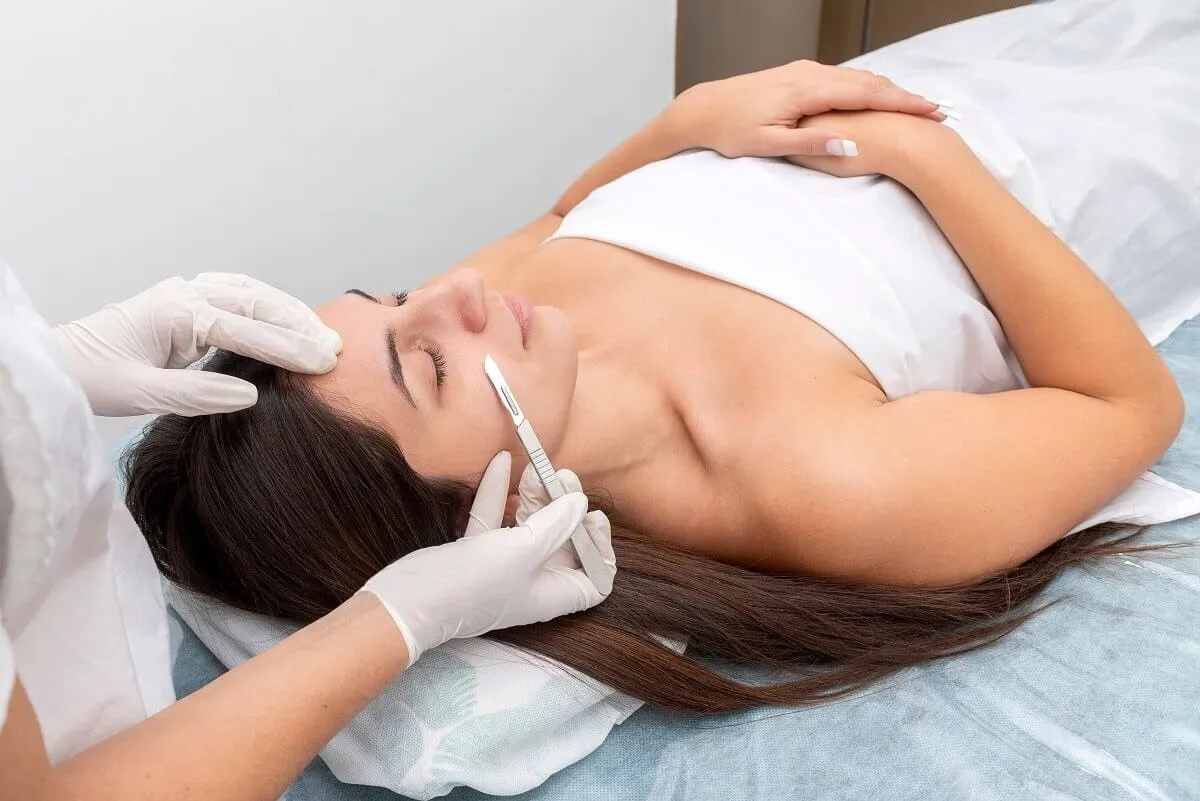
On its own, or added to a facial
Dermaplaning books both ways at Medrein. It is a complete treatment by itself, and it is also the step that goes first when another facial follows it in the same visit. Which one you want is worth deciding before you book, because it changes the length of the appointment and not much else.
On its own
Dermaplaning as the whole appointment
A 30 to 45 minute visit that exfoliates and clears vellus hair, then finishes with serums, moisturizer and SPF. This is the version most patients repeat monthly once they know their skin likes it.
- Best when the goal is a smoother surface and a clean makeup base.
- The shortest of the medical facials, with nothing to recover from.
- Easy to book before an event, since results show the same day.
As an add-on
Dermaplaning before a HydraFacial or a peel
Dr. Mikki and her aesthetician usually pair dermaplaning with another facial, because clearing the surface first is what lets the treatment behind it reach the skin evenly.
- Added to a HydraFacial in the same visit for tone and hydration.
- Added before a chemical peel so the acid meets skin, not buildup.
- Used to prep for microneedling and laser resurfacing in the same way.
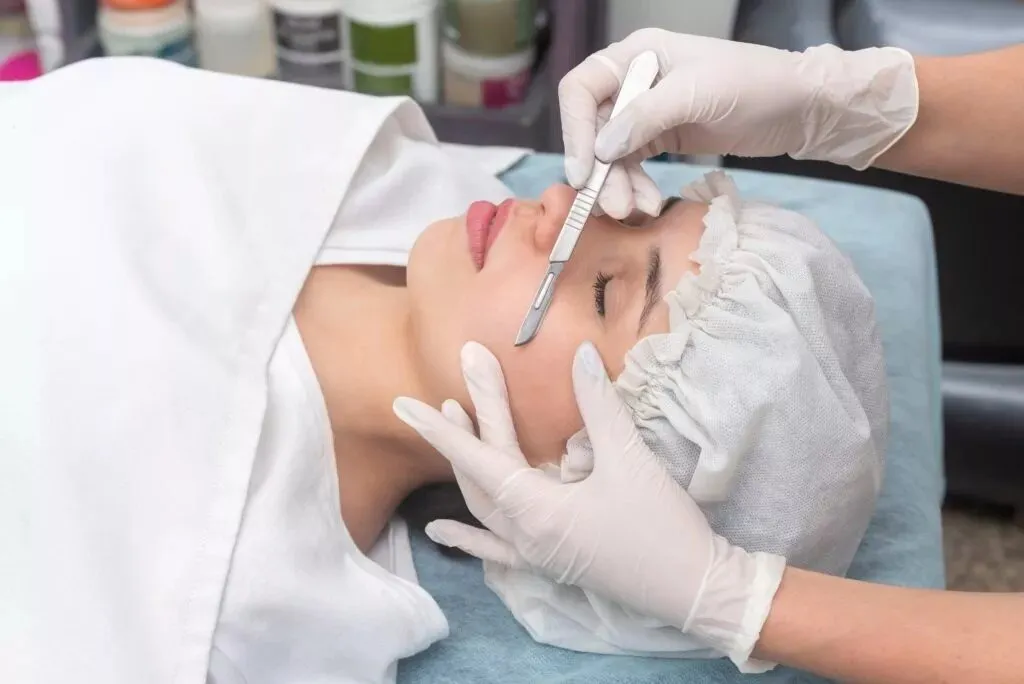
What a dermaplaning session looks like
Skin evaluation
Dr. Mikki evaluates your skin at consultation and recommends whether dermaplaning is the right treatment for it. Active acne, sunburn, eczema, psoriasis and rosacea are checked for first.
Double cleanse and prep
The skin is double cleansed, oil-based first and then water-based, and a toner prepares the surface so the blade moves over bare skin. No numbing is used and no anesthetic is needed at any point.
The blade pass
A sterile blade is drawn across the skin at an angle, lifting dead cells and vellus hair together. The treatment is primarily performed on the face, though other areas of the body can be treated.
Serums, moisturizer and SPF
Freshly exfoliated skin absorbs more, so serums and moisturizer go on at the end and SPF goes on over them. This is also the point where a HydraFacial is added, when the two are booked together.
Straight back to your day
The whole appointment runs 30 to 45 minutes with no downtime. Improvements are visible immediately, and the full result appears after a few days.
Who is in the room
Dr. Haritha Mikkilineni, MD reviews your skin at consultation and confirms that dermaplaning is the right treatment for it. The treatment itself is performed by the clinic's licensed aesthetician, who performs every facial at Medrein, including microneedling, HydraFacials and chemical peels.
When you see results, and how long they hold
Dermaplaning is one of the few treatments that shows something the same day, which is part of why patients book it before an event. It is also one that fades on a schedule. Individual results vary.
The same day
Skin looks brighter and feels smoother as soon as the pass is finished, and makeup sits flatter over it. Faint pinkness is possible and settles within the day.
After a few days
The full result appears once the skin settles. This is when the difference in how serums and moisturizer absorb is easiest to notice.
About a month
Results hold for roughly three to four weeks, which is about how long your skin takes to replace its surface cells. That turnover is why dermaplaning is booked monthly instead of once.
The first few days afterward
There is no recovery period, but freshly exfoliated skin is more sensitive than usual for a few days. Aftercare is short and it is mostly about leaving the skin alone while it settles.
Skip for a few days
- Direct sun on the treated skin.
- Extreme heat, including saunas and hot yoga.
- Harsh exfoliating scrubs and at-home acids.
- Chlorine, so give the pool a few days.
- Makeup for about the first day.
Do instead
- Apply your serums while the skin is absorbing well.
- Moisturize, morning and night.
- Wear SPF daily, which matters more than usual for the first week.
- Go back to makeup after about a day.
- Keep the rest of your routine gentle for the first few days.
The blade removes hair, not the follicle
Cutting vellus hair at the surface does not change the follicle, so it grows back at the same fine texture. When you want deeper exfoliation than a blade gives, Dr. Mikki may pair dermaplaning with a HydraFacial in the same visit.
| Feature | Dermaplaning (Medrein) | Facial Waxing | At-Home Routine |
|---|---|---|---|
| Removes dead skin and vellus hair together | Included | Not included | Not included |
| Sterile single-use blade | Included | Not included | Not included |
| No numbing required | Included | Included | Included |
| Preps skin for serums and peels | Included | Not included | Varies |
Safety and possible side effects
Why dermaplaning is considered safe
- A safe, effective, non-invasive treatment recommended for all skin types, with the exceptions listed under 'Not the right treatment' below.
- The blade is sterile and single-use, and it works only on the surface, not the follicle.
- Non-invasive, with minimal discomfort — most patients feel only a tingling sensation during the treatment.
- No downtime and no recovery window. The appointment runs 30 to 45 minutes end to end.
- Performed at a clinic led by Dr. Haritha Mikkilineni, MD, a board-certified physician.
Short-term side effects
- Soreness in the treated area.
- Red and swollen skin after the treatment.
- A tingling or burning sensation for up to two days afterward.
- Whiteheads, which can appear as the skin settles.
- Patchy skin pigment at the treatment site.
- Rarely, infection or scarring. This is uncommon, and it's why candidacy is checked first.
Who dermaplaning is for
Dr. Mikki evaluates your skin during consultation and recommends dermaplaning only when it is the right treatment for it. A HydraFacial is the gentler answer when skin is reactive, and chemical peels go deeper when the concern is pigment, not surface buildup.
A good fit
- All skin types, as long as none of the conditions listed under 'Not the right treatment' are present.
- Dull complexion or congestion from surface buildup.
- Fine facial hair that makes foundation cling or look uneven.
- Wanting a smoother base before a peel, laser resurfacing or microneedling.
- Happy to repeat monthly, since the result holds about three to four weeks.
Not the right treatment
Dermaplaning is postponed where any of these are present in the treatment area:
- Active acne in the treatment area.
- Sunburn.
- Eczema.
- Psoriasis.
- Rosacea.
Two things worth knowing before you book
Dermaplaning results last around three to four weeks, so it is a monthly habit, not a one-off. The hair does grow back, at the same fine texture it had before. Dr. Mikki evaluates your skin first and will say plainly when a different treatment is the better one. Individual results vary.
Why patients pair dermaplaning with their routine
These reflect common patient sentiment rather than verbatim quotes, and individual results vary.
My skin always looked a little rough and my foundation would cling to dry patches. After dermaplaning it was so smooth that makeup went on flat and even, and the fine hair on my cheeks was gone without any irritation. Results may vary, but I book it before every event now.
Smoother skin, better makeup, and no downtime at all. Honest advice on when to space it out.

Frequently asked questions
What is dermaplaning?
Dermaplaning is a physical exfoliation treatment. A sterile blade is held at an angle and drawn across the skin to remove the outermost layer of dead cells and the fine vellus hair on the face. The result is a smoother surface that takes skincare and makeup more evenly, and it helps prevent the congestion and dull complexion that surface buildup causes.
Will the hair grow back thicker or darker?
No. Dermaplaning removes vellus hair, and because the results last about a month the hair does grow back after that period. It will not be thicker or darker. The hair that returns is the same fine texture it was before, because cutting it at the surface does not change the follicle.
Does dermaplaning hurt?
Dermaplaning is a non-invasive procedure with minimal discomfort. Most patients feel only a tingling sensation during the treatment. No numbing is needed, and pressure is adjusted to your skin sensitivity, with areas of broken or inflamed skin avoided.
Who is dermaplaning not suited for?
Dermaplaning is safe for all skin types except where certain skin conditions are present: active acne, sunburn, eczema, psoriasis or rosacea in the treatment area. Dr. Mikki reviews your skin at consultation and will recommend a gentler option when dermaplaning is not the right fit.
Can dermaplaning be done anywhere other than the face?
Dermaplaning is primarily performed on the face, which is where vellus hair and surface dullness are most noticeable, but it can also be done on other parts of the body. Dr. Mikki confirms which areas make sense for your skin at consultation.
Can dermaplaning be combined with other treatments?
Yes. Dermaplaning can be combined with a HydraFacial in the same visit for improved skin tone and appearance, and it primes the skin for chemical peels, laser resurfacing and microneedling by clearing the buildup that would otherwise sit in the way. Dr. Mikki sequences the combination at your consultation.
How is dermaplaning different from a HydraFacial or a chemical peel?
Dermaplaning is mechanical exfoliation with a blade and removes vellus hair, which the other two do not. A HydraFacial cleanses and hydrates using water-based vortex technology. A chemical peel uses acids to exfoliate more deeply. Dermaplaning is often done first so peels and serums reach the skin more evenly.
How often should I have dermaplaning?
Dermaplaning results last around three to four weeks, so the treatment is usually repeated about every month to keep skin looking healthy and radiant. Dr. Mikki sets the interval based on your skin type and whether it is paired with other treatments.
Who performs dermaplaning at Medrein?
Dermaplaning is performed by the licensed aesthetician who performs every facial at Medrein, including microneedling, HydraFacials and chemical peels. Dr. Haritha Mikkilineni, MD, a board-certified physician, evaluates your skin at consultation and confirms you are a good candidate before you book.
Is dermaplaning right for your skin?
Dr. Mikki checks your skin for active breakouts or sensitivity, confirms candidacy, and sets your interval.
4.8★ from 128 verified Google reviews