Hair Loss Medication in Southlake, TX
Dr. Mikki reviews your health history and the pattern of your hair loss before prescribing minoxidil, finasteride or another oral agent, and monitors you while you take it.
- Google 4.8★
- Yelp 5.0★
What hair loss medication does
These are prescription medicines taken every day, and they work on the hair growth cycle for as long as they are being taken. Each one carries possible side effects, which is why your health history and current medicines are reviewed before anything is prescribed. Medication may be used alongside in-office Hair Restoration treatments when appropriate.
Hair growth medications and how each one works
Which medication is appropriate depends on the cause of your hair loss and on your own health history. The possible side effects are part of that decision, so they are set out in the same table.
| Medication | How it works | How it is taken, and side effects |
|---|---|---|
| Minoxidil (Rogaine) | How it works:Stimulates the follicles and prolongs the growth phase of the hair cycle. Suitable for both men and women. | Notes:Applied topically, or taken orally where that fits better. Can cause scalp irritation and unwanted hair growth elsewhere. |
| Finasteride (Propecia) | How it works:A 5-alpha reductase inhibitor that reduces DHT in the scalp and bloodstream. Mainly used for male-pattern baldness. | Notes:A daily oral tablet. Can cause sexual dysfunction, decreased libido and mood changes. Not prescribed to women who are or may become pregnant. |
| Dutasteride (Avodart) | How it works:Works in a similar way to finasteride, blocking both forms of the enzyme that converts testosterone to DHT. | Notes:A daily oral tablet. Similar side effects to finasteride, including possible effects on sexual function. |
| Spironolactone | How it works:An anti-androgen, particularly useful in female-pattern hair loss. | Notes:Can cause dizziness, increased urination and menstrual irregularities in women. |
| Retinoic acid | How it works:A vitamin A derivative that promotes cell turnover and increases how much minoxidil the scalp absorbs, so it is used alongside minoxidil. | Notes:Applied topically or included in an oral formulation. Can cause scalp irritation and increased sensitivity to sunlight. |
| Latanoprost | How it works:A prostaglandin analogue used in select cases as part of a combination plan. | Notes:Prescribed selectively, and only where it suits the pattern of hair loss. |
What hair growth medications are used for
- Stimulating dormant hair follicles
- Slowing or preventing hair loss
- Increasing hair thickness and density
- Blocking DHT
- Improving scalp circulation
- Supporting post-transplant recovery
Vitamins and minerals used alongside them
- Vitamin B1 (thiamin)
- Vitamin B2 (riboflavin)
- Vitamin B5 (pantothenic acid)
- Vitamin B6 (pyridoxine HCl)
- Vitamin B9 (folic acid)
- Vitamin B12 (methylcobalamin)
- Zinc gluconate
These support a plan rather than replace it. Testing can identify a deficiency worth correcting as part of establishing why your hair is thinning.
Male-pattern and female-pattern hair loss are graded differently
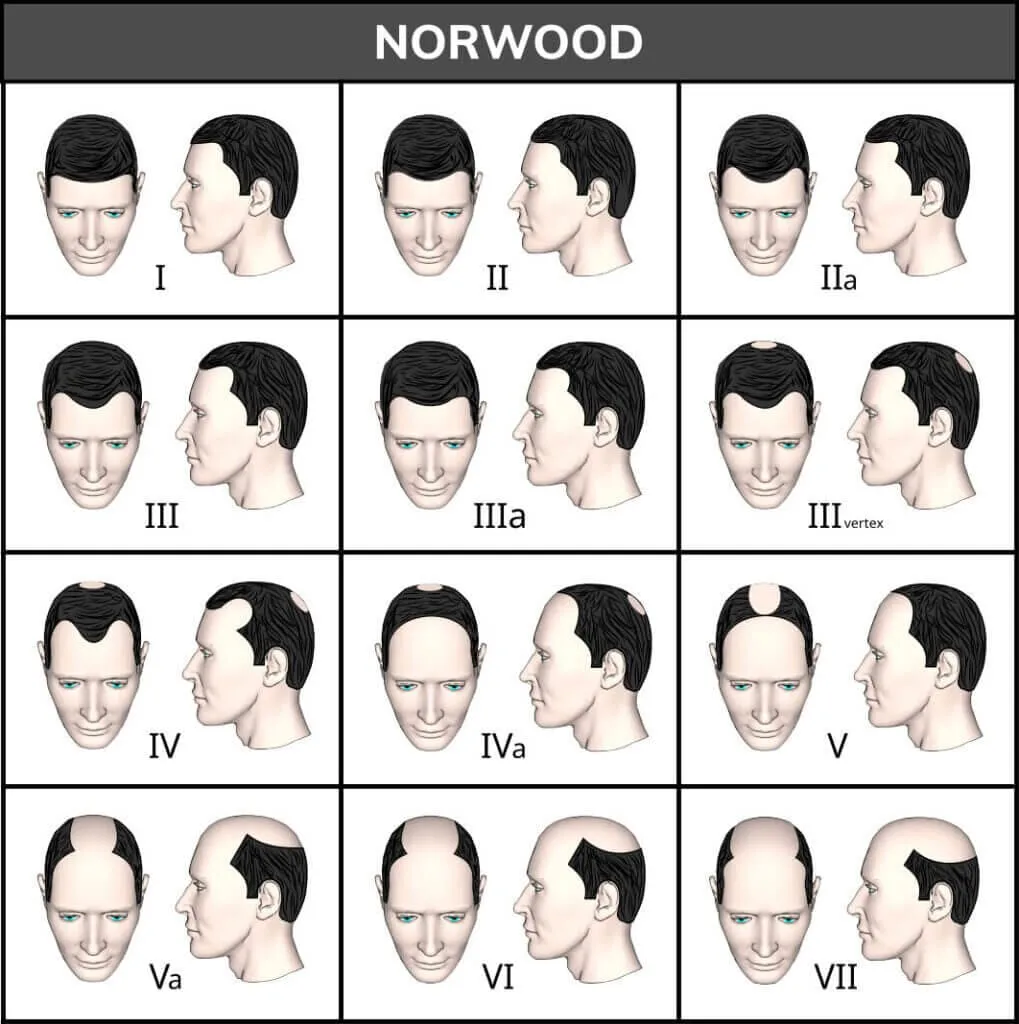
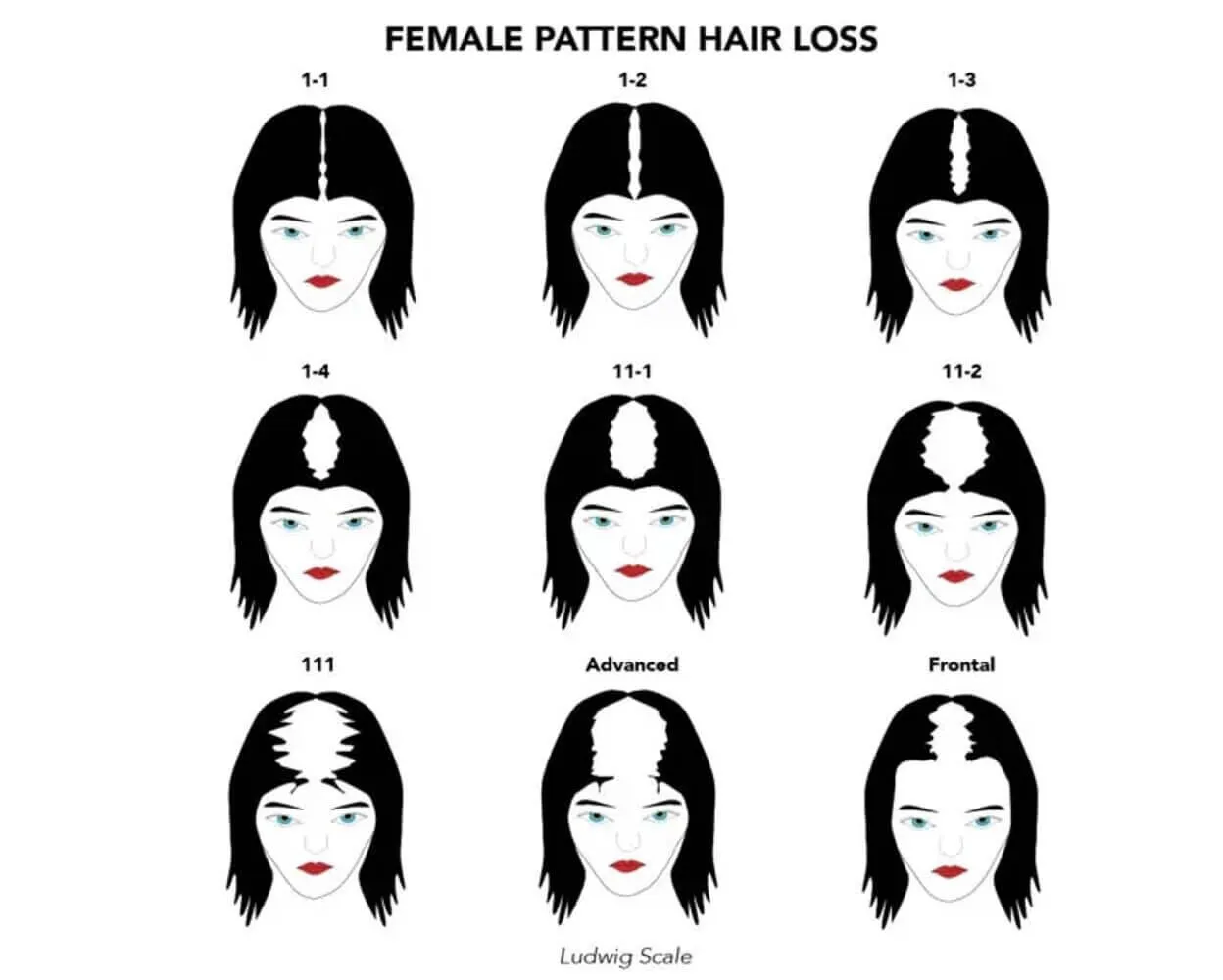
The Norwood-Hamilton scale for men and the Ludwig scale for women classify the stages of hair loss and track its progression. Where you sit on your own scale is one of the things that informs which medication above is appropriate. Grading is part of the wider hair restoration assessment.
Norwood-Hamilton scale (men)
Ludwig scale (women)
How the prescription is managed
A prescription follows a scalp examination and a review of your health history and current medicines. The possible side effects are explained before you start, and you are seen again while you are taking it. Where it is appropriate, PRP therapy or laser stimulation can form part of the same plan.
| Feature | Medication | In-Office Treatment |
|---|---|---|
| Taken at home, on your own routine | Included | Not included |
| Carried out in clinic by a clinician | Not included | Included |
| Acts continuously while it is being used | Included | Not included |
| Delivered in scheduled sessions | Not included | Included |
| Reviewed at follow-up | Included | Included |
What the timeline can look like
The early weeks
Change is not usually visible at this stage. Hair grows in cycles that turn over slowly, so the early weeks are about taking the medication consistently.
The first few months
Some patients notice reduced shedding before they notice any new growth. This is a point at which the plan is reviewed with you.
Longer term
Where regrowth does appear, it tends to appear gradually. Responses differ from person to person: some patterns improve further, others hold steady.
Benefits and side effects
What medications offer
- May support hair growth.
- May help slow certain types of hair loss.
- Non-surgical, with no procedure and little to no recovery time.
- Convenient, since it fits into a daily routine at home.
- Can be combined with in-office treatments, because each works through a different mechanism.
Potential side effects
- Skin and scalp reactions, such as irritation where a topical is applied.
- Unwanted hair growth in areas other than the scalp.
- Hormonal effects, which can include changes in libido, sexual function or mood.
- Increased sensitivity to sunlight.
- Dizziness, increased urination or changes to the menstrual cycle with an anti-androgen.
- Which of these applies depends on the medication. The table above sets out the notes for each one, and everything is checked against your own history and your other medicines first.
Who hair loss medication is for
The cause of the thinning is established first, because it decides whether medication is the right route at all. Other options include platelet injections, laser stimulation and hormone therapy, and candidacy for any of them is confirmed at consultation.
Who may be a candidate
- Thinning that follows a male-pattern or female-pattern distribution, confirmed at examination.
- Looking for a treatment that is taken at home rather than a procedure in clinic.
- Able to take a medication consistently, since it is used continuously rather than in a course.
- Willing to attend follow-up while on a prescription.
When medication may not be appropriate
- Looking for a one-off treatment, since the effect depends on continued use.
- Pregnancy or the possibility of it, which rules out finasteride and dutasteride.
- Hair loss driven by something a hair medication does not treat, such as an untreated thyroid or hormone condition.
- Areas that have been completely bald for years, where there may be no follicles left for a medication to act on.
Before you book, three things worth knowing
These are prescription medicines, and their possible side effects are set out for you before a prescription is written. Any change is gradual, so taking the medication consistently matters more than the choice of any one product, and individual results vary. The effect also depends on continued use, which is worth knowing before you start.
Why patients want a physician involved
These reflect common patient sentiment rather than verbatim quotes, and individual results vary.
I had ordered a subscription for finasteride online before, but no one ever looked at my scalp or my history. Dr. Mikki went through the side effects with me in plain language and monitored me on it, then added a topical minoxidil that fit my routine. Results may vary, but having a physician manage the prescription made me far more comfortable staying consistent.
A real review of my history and the risks before a prescription, not just a checkout form.

Frequently asked questions
Which hair loss medications does Medrein prescribe?
The most common are minoxidil, which prolongs the hair growth phase and is used topically or orally, and finasteride, which lowers the DHT that drives male-pattern thinning. Women may be treated with topical minoxidil and, in select cases, an oral agent such as spironolactone. Dr. Mikki decides what fits after reviewing your history, your pattern, and your other medications.
Do I need a prescription and a physician visit?
Yes. Finasteride and oral minoxidil are prescription medications, and which one is appropriate depends on your health history and on the risks specific to you. The visit covers a scalp examination and a review of your history, and you are seen again once you are on the medication.
What are the side effects of finasteride?
Finasteride can cause sexual side effects such as reduced libido or erectile changes in a minority of men, which usually resolve after stopping. It is not prescribed to women who are pregnant or who may become pregnant, because it can affect a developing fetus. Dr. Mikki reviews these risks with you honestly before you decide, and monitors you while you take it.
How long until hair loss medications work?
Medications act on the hair cycle slowly. Many patients see reduced shedding within a few months and gradual thickening over six to twelve months of consistent daily use. Stopping the medication reverses the benefit over time. Results may vary, and Dr. Mikki sets a realistic timeline for your case.
Can I use medications together with PRP or HaiRestart?
Yes, and many plans do. A daily medication maintains the follicles from within while in-office treatments add stimulation, so the three work through different mechanisms. Dr. Mikki decides which combination fits your pattern and how your follicles are responding rather than applying one plan to everyone.
Do the results last if I stop taking them?
Hair loss medications treat an ongoing process, so any benefit depends on continued use and the original pattern may return over time once they are stopped. What continued use involves, and what to expect if you pause, is covered at your consultation.
Which is better for hair loss: spironolactone, minoxidil, finasteride or dutasteride?
Which one is appropriate depends on the underlying cause of your hair loss. Minoxidil is used in both men and women and works by stimulating hair growth. Finasteride and dutasteride block DHT, which is why they are used in male-pattern baldness. Spironolactone is an anti-androgen used in female-pattern hair loss. In some cases a combination, sometimes including retinoic acid, is used instead of a single medication.
What are the common causes of hair loss?
Hair loss can come from genetics (androgenetic alopecia), hormonal imbalance such as PCOS or a thyroid disorder, nutritional deficiency in iron, biotin or vitamin D, certain medications including chemotherapy, steroids and blood thinners, and stress-related conditions such as telogen effluvium. Identifying the root cause is what determines the right treatment, which is why Dr. Mikki examines and tests before prescribing.
How much do hair restoration medications cost?
Cost varies with the medication chosen and with whether you have insurance coverage for it, and prescription pricing also moves with brand and pharmacy. Ask for the specifics at your consultation, once it is clear which medication suits your pattern.
Is a hair loss medication right for you?
A consultation establishes what is causing the thinning, which is what decides whether a medication is the right route for you.
4.8★ from 128 verified Google reviews