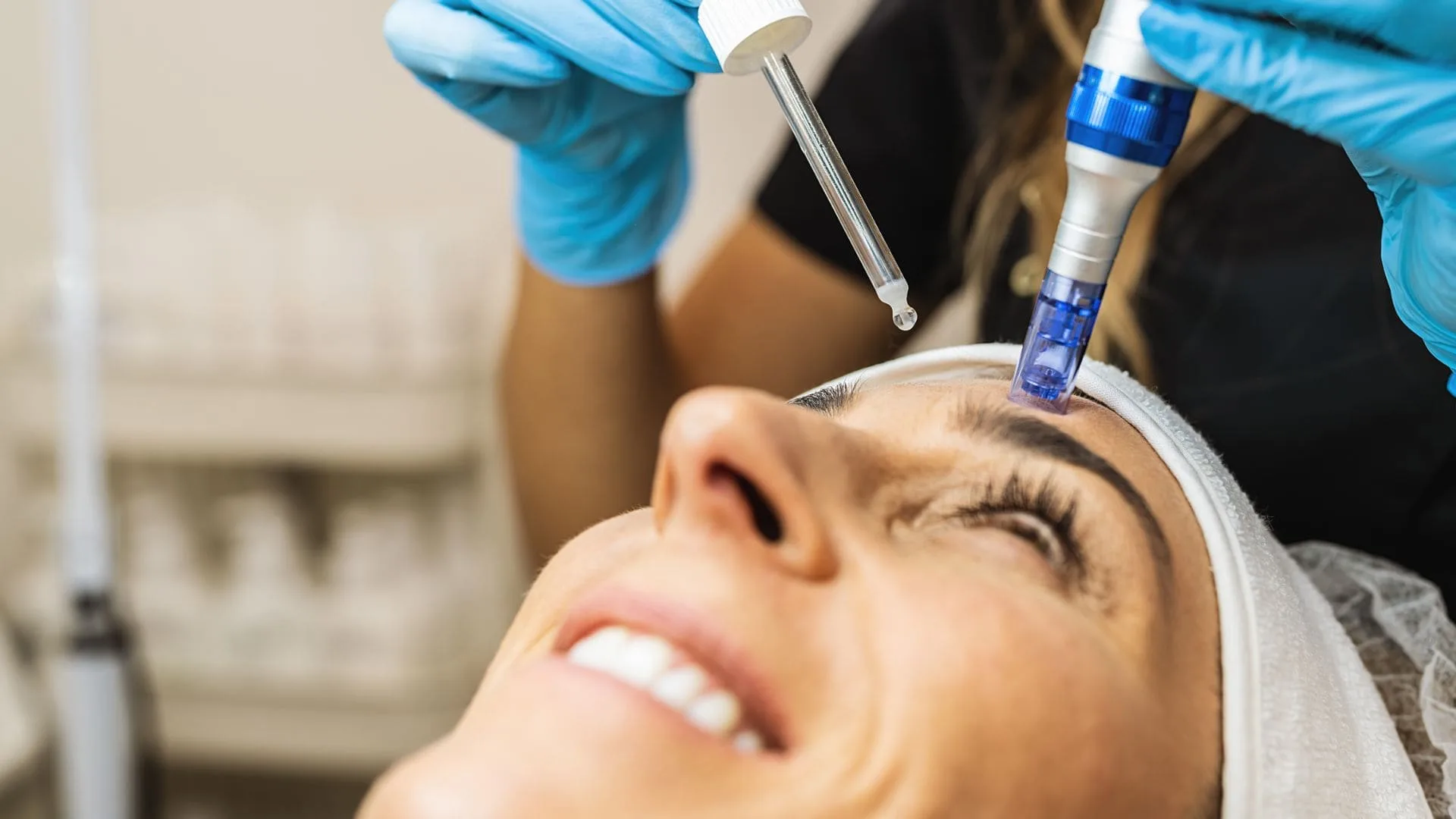
Microneedling with PRP/PRF in Southlake, TX
Microneedling creates micro-channels in the skin, then platelets drawn from your own blood are applied to support collagen. It treats tone and the texture of skin and scars, and results build over several weeks.
- Google 4.8★
- Yelp 5.0★
How PRP and PRF work with microneedling
Fine needles open controlled micro-channels in the skin, and the channels do two things: they trigger a repair response, and they give the platelet concentrate a route into the dermis it would not otherwise have. The concentrate is where PRP and PRF differ. PRF is spun without an anticoagulant, so it sets into a fibrin scaffold and releases its growth factors over several days; PRP has no scaffold and delivers them at once. Dr. Mikki chooses between them on what your skin is being treated for, how reactive it is, and how much recovery time you have before the sessions that follow. This is one version of microneedling among several.
What comes from your own blood
What microneedling with PRP/PRF is used for
These are the concerns patients book this treatment for. Dr. Mikki treats the ones your skin actually presents, and a plan may work on more than one of them across a series rather than on all of them in a single pass. The same platelets are also used for thinning hair. Individual results vary.
Commonly used for
- Fine lines and wrinkles
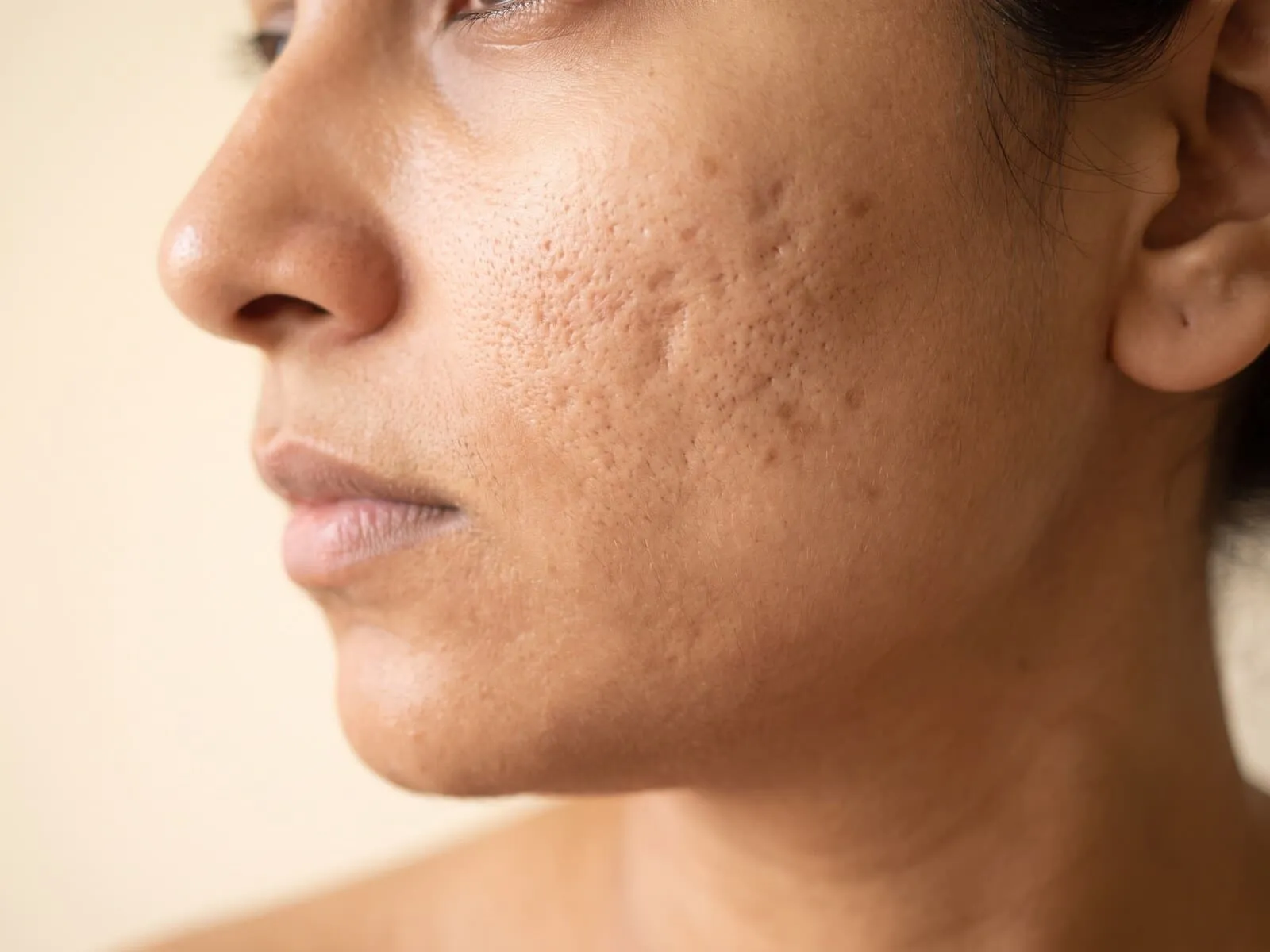
- Acne and surgical scars
- Hyperpigmentation and sun damage
- Enlarged pores
- Skin laxity
- Stretch marks
- Hair restoration
Reported benefits
- Boosts collagen and elastin
- Accelerates healing
- Minimizes acne scars
- Shrinks enlarged pores
- Improves hydration and glow
- Enhances tightening and elasticity
- Used across skin types
- Minimal downtime
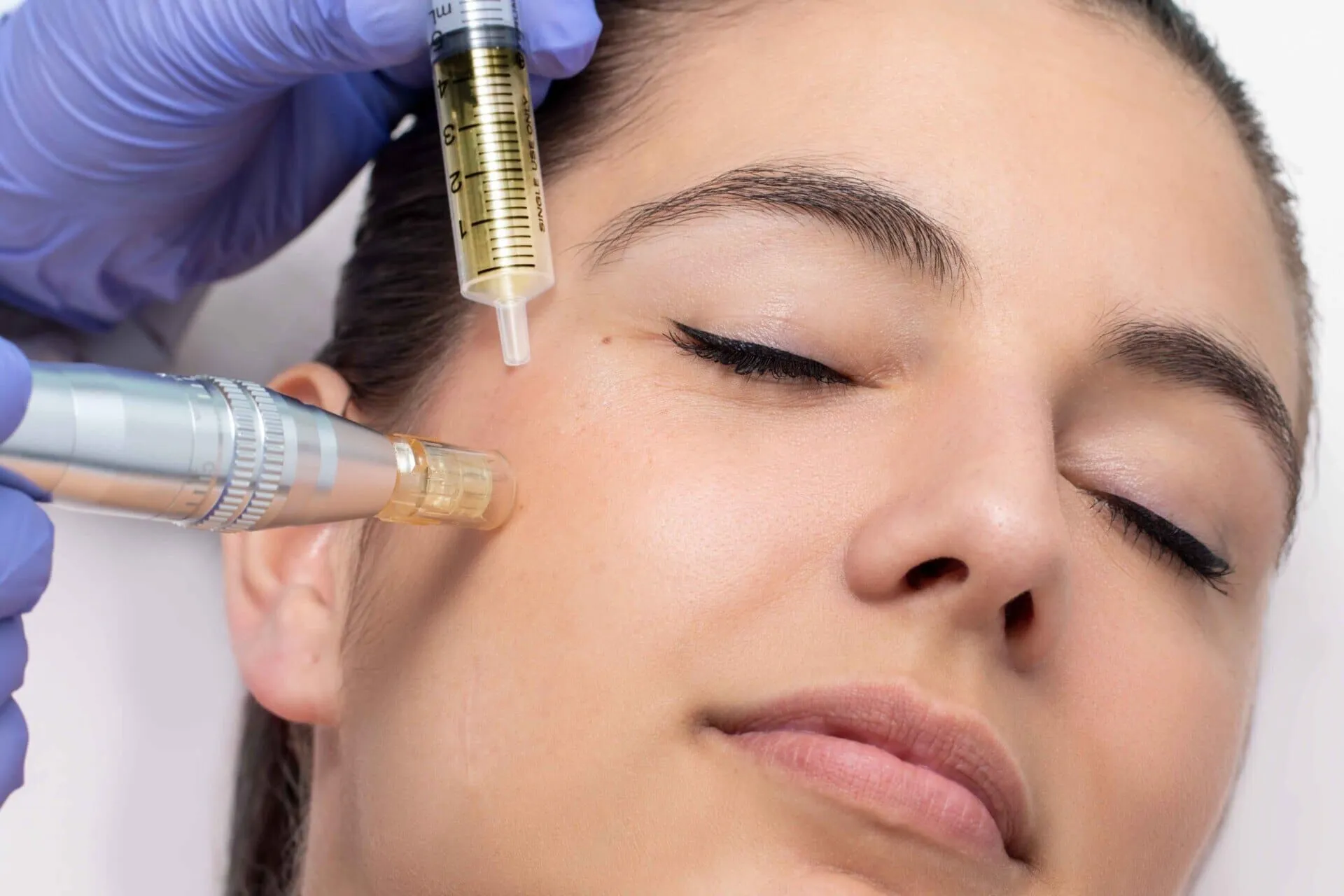
What a PRP/PRF session looks like
Five steps, and most of the appointment is the wait inside one of them: the ten minutes your blood spends in the centrifuge is why this books longer than a needle-only session.
Consultation and PRP or PRF
Dr. Mikki reviews your skin and your goals and decides between platelet-rich plasma and platelet-rich fibrin. PRF holds a higher concentration of growth factors and fibrin, which may promote longer-lasting results.
The blood draw
A small amount of your blood is drawn from your arm and placed in a centrifuge, which spins it fast enough to separate its components by density.
Processing, about ten minutes
Roughly ten minutes of spinning separates the platelet-rich layer from the rest of the sample, and that layer is drawn off into a syringe. How the sample is spun and which layer is taken differ between PRP and PRF, which is why Dr. Mikki settles that choice before the draw rather than after it.
Numbing and the microneedling pass
A topical numbing cream is applied to minimize discomfort. Fine needles then create controlled micro-injuries in the skin while the concentrate is applied to the treated area.
Aftercare before you leave
Dr. Mikki goes through aftercare in the room: what to put on the skin, what to leave off it, and when to book the next session. Recovery and the results timeline are set out in the next section.
PRP or PRF, chosen for your skin
PRP delivers a concentrated burst of platelets, while PRF forms a fibrin scaffold that releases them slowly. When laxity is the main concern rather than texture, Dr. Mikki may point you toward RF microneedling instead.
| Feature | PRP | PRF | Microneedling Alone |
|---|---|---|---|
| Uses your own blood | Included | Included | Not included |
| Growth factors released slowly | Not included | Included | Not included |
| Adds growth factors to the channels | Included | Included | Not included |
| Spun without an anticoagulant | Not included | Included | N/A |
Safety, comfort and the days after
Why the treatment is considered safe
- Because the concentrate is autologous, there is nothing foreign in it for your body to react to.
- The treatment is used across skin types and tones, because it works through your body’s own healing response.
- Most people report only a mild prickling sensation during the pass.
- Performed at a clinic led by Dr. Haritha Mikkilineni, MD, a board-certified physician whose emergency-medicine background is the training sterile handling of blood asks for.
Downtime and the timeline
- Redness and swelling, which subside within 24 to 72 hours.
- Some initial improvement is visible immediately after the treatment.
- Full results appear gradually over several weeks as collagen and elastin production increases.
- Most plans run three to four treatments spaced four to six weeks apart.
- Individual results vary, and Dr. Mikki sets a realistic timeline at consultation.
Who microneedling with PRP/PRF is for
Dr. Mikki confirms candidacy at consultation and will say when a sibling treatment fits better: RF microneedling when laxity is the main concern, or SkinPen microneedling when you would rather skip the blood draw.
A good fit
- Fine lines, acne scars, hyperpigmentation or skin laxity you want treated together.
- Skin of any tone, since nothing in this treatment relies on light or on pigment.
- Thinning hair as well as skin concerns, since the same platelets are used for both.
- Willing to commit to a series rather than a single appointment.
Where something else fits better
- Wanting a same-day change, since your skin does the building afterward.
- Marked skin laxity, where radiofrequency energy at depth does more than needles and platelets.
- Deep texture that calls for resurfacing rather than collagen induction.
- Preferring not to have blood drawn, in which case needle-only microneedling is the alternative.
Two things worth knowing before you book
This is a series rather than a single appointment, and the change is built by your skin in the weeks between sessions instead of appearing on the day you are treated. Dr. Mikki sets the number of sessions and the spacing at consultation, and individual results vary.
Why patients choose PRP or PRF microneedling
These reflect common patient sentiment rather than verbatim quotes, and individual results vary.
I had shallow acne scars and rough texture on my cheeks that makeup only highlighted. Over a series of microneedling with PRF, the surface smoothed out and my skin looked healthier rather than "done." Dr. Mikki explained why PRF suited me better than PRP before we started. Results may vary, but the change built up naturally.
My own growth factors, drawn and spun by the doctor herself, and a clear plan for how many sessions.
Frequently asked questions
What is microneedling with PRP or PRF?
Microneedling creates controlled micro-channels in the skin to trigger collagen production. PRP (platelet-rich plasma) or PRF (platelet-rich fibrin) is drawn from your own blood, concentrated in a centrifuge, and applied to those channels. The growth factors support the skin’s repair response for tone and the texture of skin and scars.
What is the difference between PRP and PRF?
Both come from your own blood. PRP is spun with an anticoagulant and delivers a concentrated burst of platelets. PRF is spun without an anticoagulant, so it forms a fibrin scaffold that releases growth factors more slowly over several days. Dr. Mikki recommends one based on your skin and goals at consultation.
Is the "vampire facial" the same thing?
Yes, "vampire facial" is a popular name for microneedling combined with PRP. The mechanism is the same: micro-channels plus your own concentrated platelets. Because it uses blood, sterile technique and medical handling matter, which is why it is performed at a physician-led clinic.
What does microneedling with PRP/PRF treat?
It is used for skin texture, enlarged pores, dullness, uneven tone and the appearance of acne scars, and it is a common approach for the under-eye area. It works through collagen stimulation rather than resurfacing, so results build gradually. Results may vary by skin type.
How many sessions will I need and what is the downtime?
Most people need a series of three to four treatments spaced four to six weeks apart to reach optimal results, and the plan is set at consultation based on your concern. Redness and swelling subside within 24 to 72 hours after each session. Dr. Mikki reviews aftercare before you book.
How is this different from RF microneedling or SkinPen microneedling?
SkinPen microneedling uses needles alone. RF microneedling adds radiofrequency energy at depth for laxity and deeper remodeling. Adding PRP or PRF layers your own growth factors onto the microneedling channels. Dr. Mikki matches the version to what your skin needs.
Is microneedling with PRP/PRF painful?
A topical numbing cream is applied before the treatment to minimize discomfort. Most people report feeling only a mild prickling sensation during the procedure. Sensation varies by skin sensitivity, and Dr. Mikki adjusts depth to what your skin tolerates.
When will I see results?
You may notice some initial improvement immediately after the treatment, but full results typically appear gradually over several weeks as collagen and elastin production increases. Individual results vary with skin type and the number of sessions completed.
Who performs the treatment at Medrein?
The blood draw, processing and treatment are performed at a clinic led by Dr. Haritha Mikkilineni, MD, a board-certified physician with an ER background, so the draw and the centrifuge step are performed by a physician rather than delegated to a technician.
Is microneedling with PRP/PRF right for you?
Dr. Mikki reviews your skin, recommends PRP or PRF, and sets your session count at consultation.
4.8★ from 128 verified Google reviews