Laser Acne Scar & Scar Revision Treatment in Southlake, TX
Laser acne scar treatment and scar revision in Southlake, TX. Fotona's dual-wavelength laser system remodels acne scarring and surgical, traumatic and keloid scars.
- Google 4.8★
- Yelp 5.0★
One platform for scars of different kinds
Scar treatment at Medrein runs on the Fotona SP Dynamis. One wavelength resurfaces uneven texture at the surface, and a second reaches deeper to remodel collagen and calm redness. The same platform treats acne scarring along with surgical, traumatic, and keloid scars, each assessed on its own before a plan is set.
What each pass does to a scar
The scar types this treatment addresses
Acne and facial scarring
Where most patients start, and the scarring the surface resurfacing pass was built for.
-
Acne scars
Pitted and rolling scars resurfaced at the surface while the collagen beneath is remodeled.
-
Post-acne marks
The flat brown or red marks acne leaves behind, treated as pigment rather than as texture.
-
Facial surgical scars
Scars left by a procedure, softened in texture and color once the scar has matured.
Body, raised and stretched scarring
The same platform below the jawline, assessed scar by scar.
-
Injury and traumatic scars
Scars from injury vary in depth and age, so the passes are timed to the scar.
-
Keloid scars
Raised, spreading scars that can react unpredictably and are reviewed individually first.
-
Hypertrophic scars
These respond to the deeper laser pass, which is well studied for redness, volume, and pliability.
-
Burn scars
One of the scarring types this treatment addresses, assessed on its own terms like any other scar.
-
Stretch marks
Striae treated as scar tissue, on the same platform and across the same kind of series.
What a scar revision session looks like
Scar assessment
Dr. Mikki looks at each scar separately: its type, its age, its depth, and your skin type. Only then is a plan set. Raised and keloid scars are reviewed on their own terms, and you will get a plain answer when a laser is not the right approach.
Numbing
Scar revision is generally well tolerated. Where a scar or an area needs it, numbing cream or a local anesthetic is used to keep the session comfortable.
The two passes
The surface pass removes damaged tissue precisely and triggers collagen remodeling, and it is the pass that works best on acne scarring. The deeper pass then reaches further, and it is the one studied on hypertrophic scars for redness, volume and pliability.
Aftercare
Keep the area clean and moisturized, do not scratch or rub it, and do not pick any scabs that form. Stay out of the sun and wear sunscreen when you go out, and leave makeup off for at least 24 hours.
Safety and what to expect afterward
Why laser scar revision is considered safe
- Generally well tolerated, with numbing cream or a local anesthetic used where a scar needs it.
- Non-surgical: the scar is remodeled through the skin, not cut out and re-closed.
- Two wavelengths on one platform, so surface texture and deeper collagen are addressed in the same plan.
- Used across acne, surgical, traumatic, keloid, hypertrophic, burn and stretch-mark scarring.
- Dr. Mikki, a board-certified physician, assesses every scar and performs the treatment herself.
Possible side effects
- Swelling in the treated area, which settles over the following days.
- Crusting of the skin as the treated surface heals.
- Discoloration in the treated area, which pigment-prone skin is more susceptible to.
- Dryness, irritation, redness or a burning sensation for a few days after a session.
- Raised and keloid scars can react unpredictably, which is why they are assessed individually.
Who laser scar revision is for
Dr. Mikki confirms candidacy against the scar, its history and your skin type, and will tell you when a different treatment fits better: full-face laser resurfacing when the concern is overall texture, or the wider Fotona platform when the scarring sits alongside another concern.
A good fit
- Acne scarring with pitted, rolling or uneven texture.
- A matured surgical or traumatic scar you want softer in texture and color.
- Hypertrophic scarring, which this treatment has strong evidence for.
- Stretch marks or burn scarring you want treated on the same platform.
- Willingness to run a series: most patients need four to six sessions.
Not the right treatment
- A scar that is still fresh and has not yet matured.
- Wanting a single-session fix, since scar tissue remodels gradually over months.
- Expecting a scar to fully disappear, when the realistic outcome is less visible texture and color.
- Keloid scarring where Dr. Mikki judges another approach or a referral is the honest answer.
Before you book, three things worth knowing
Results vary with the treatment used and how severe the scar is. Some improvement can show after a few weeks, but optimal results usually take several months and multiple sessions. Cost depends on the treatment type and the number of sessions, so get a written quote at consultation. And laser revision makes a scar less visible in texture and color; it does not erase it.
If the acne is still active
Scarring is the focus here, but revising scars while acne is still breaking out means new marks form as fresh lesions heal. Dr. Mikki clears the acne first, then revises what it left. These are the options she works with, and several run on the same Fotona SP Dynamis platform.
What drives acne besides excess sebum
- Hormonal changes
- Medications
- Environmental changes
- Stress
- A diet heavier in junk and oily food
- Inflammation of the deeper skin layers
- Decreased collagen production
- Bacterial infection
Before and after
Most of these pairs show active acne clearing rather than scars being revised, which is the step that comes first; two of them show pitted scarring resolving. Each holds one area of skin before treatment beside the same area after. Twelve cases, and individual results vary.
Scroll the row sideways for the rest.
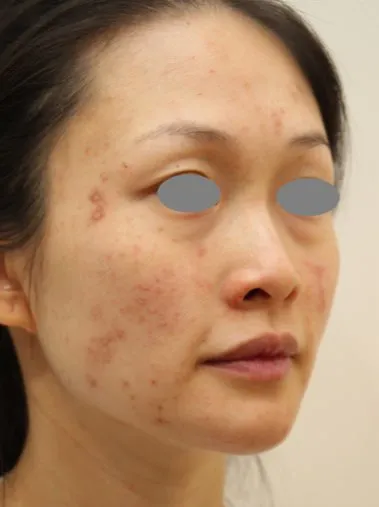
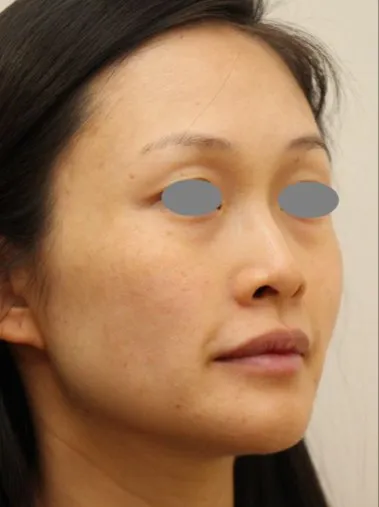
Inflamed spots scattered across the cheek and temple, over red-brown marks left by earlier lesions.
Two complementary wavelengths run across four modes on one platform.
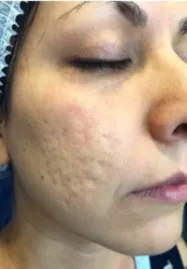
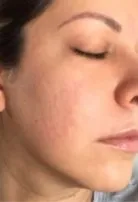
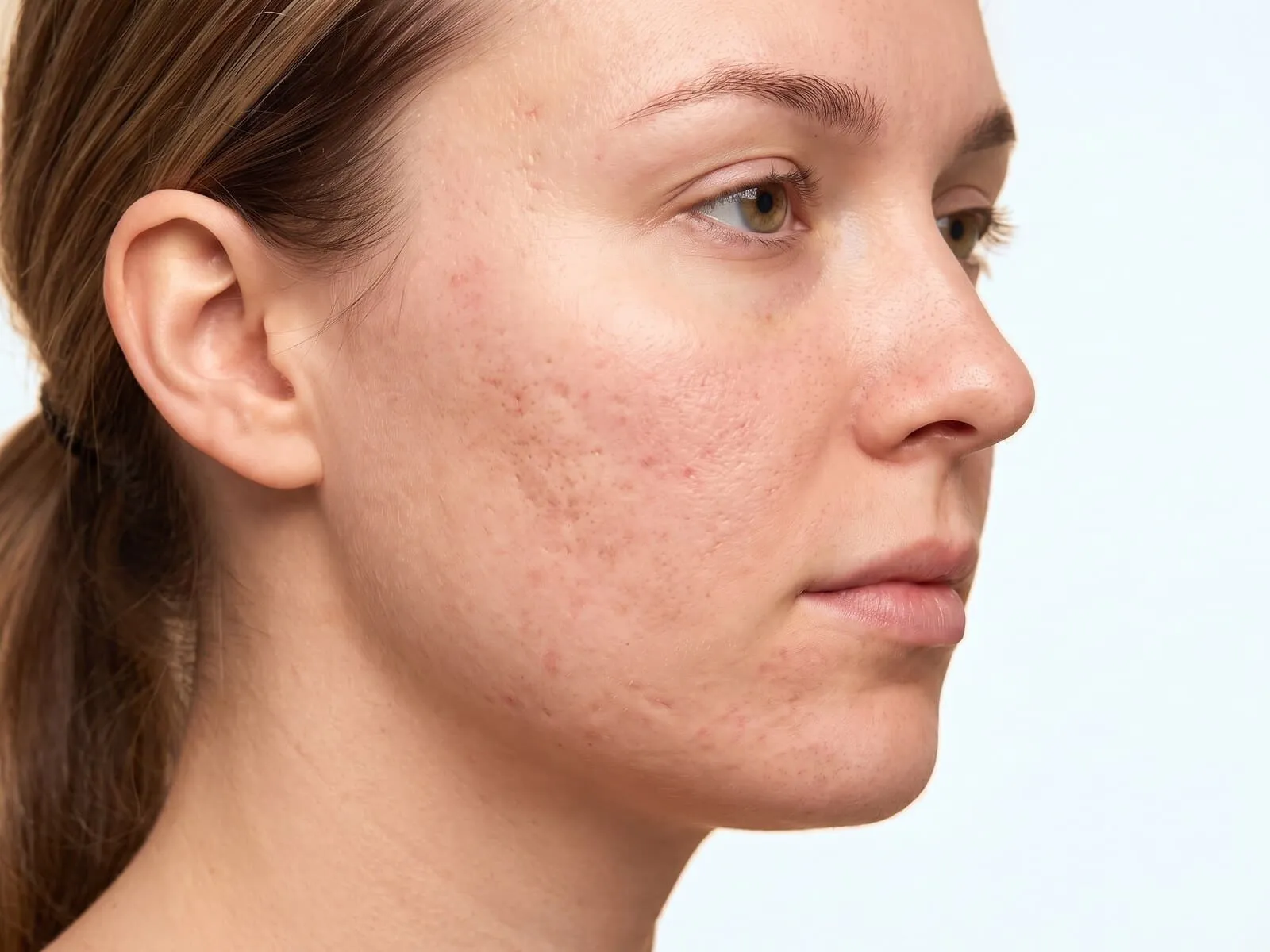
Pitted, rolling scarring across the cheek, thrown into relief by the light.
Fractional passes remodel the collagen under a depressed scar.
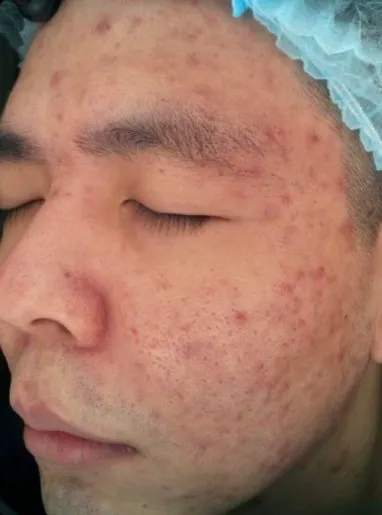
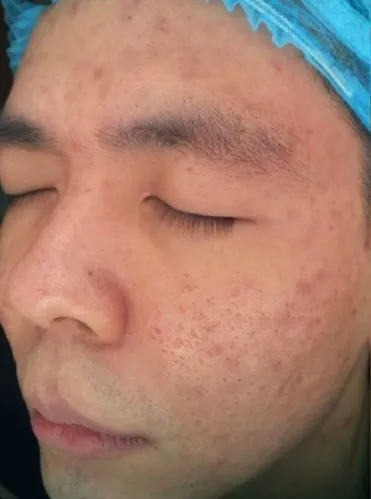
Dense papules across the cheek, the forehead and the jaw, with redness running between them.
Widespread inflammation is calmed before any resurfacing is attempted.
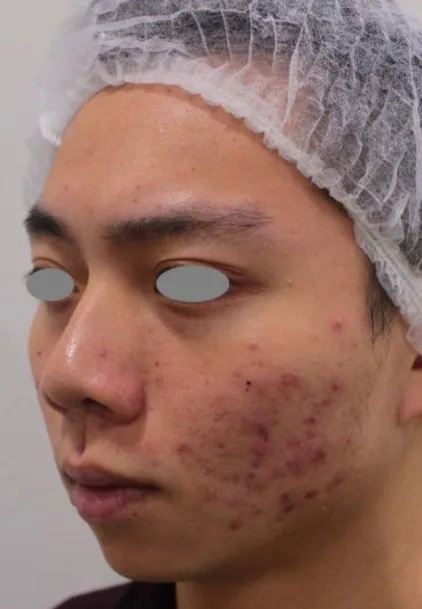
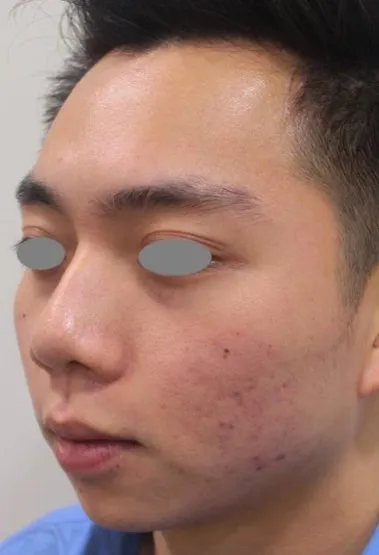
Inflamed cystic lesions along the lower cheek and jaw, over dark marks from earlier spots.
Oral treatment lowers sebum and answers acne driven by bacteria.
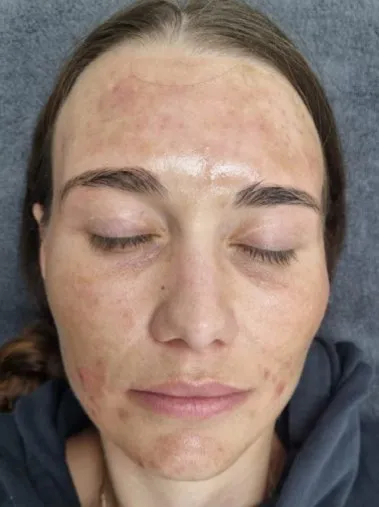
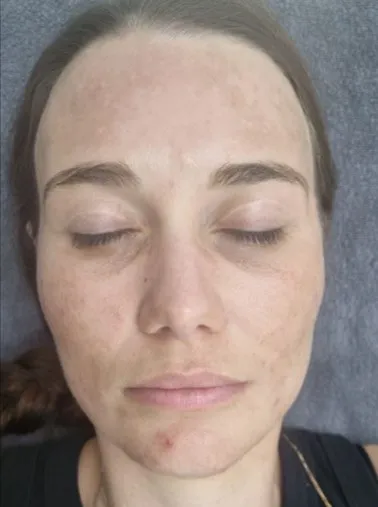
Spots and red marks scattered across the forehead, both cheeks and the chin.
A full-face pass treats the areas that are quiet as well as the ones that are not.
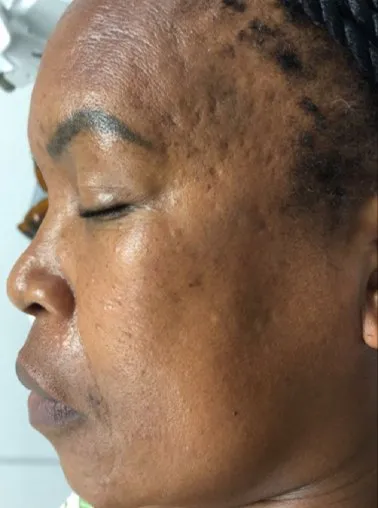
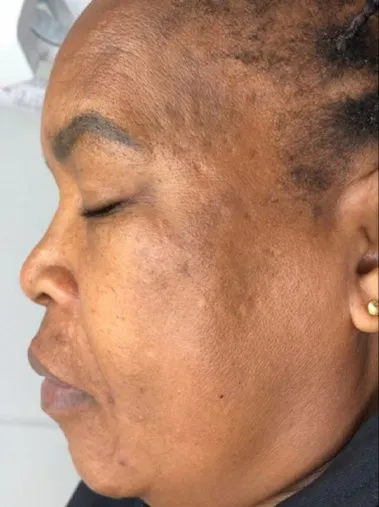
Dark marks left by settled spots, massed along the jawline and up over the temple.
Post-inflammatory marks are pigment, and pigment is what the second wavelength is for.
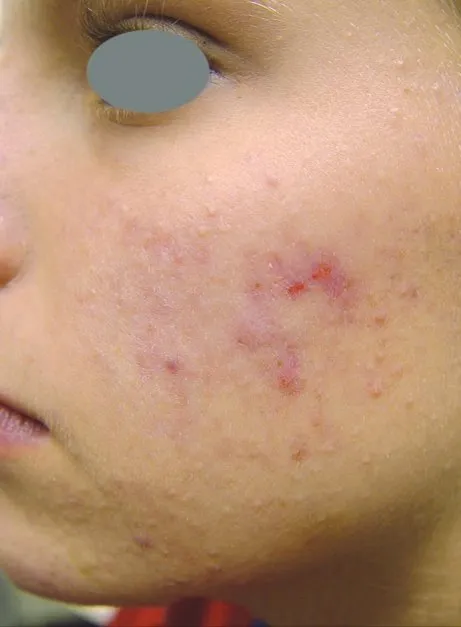
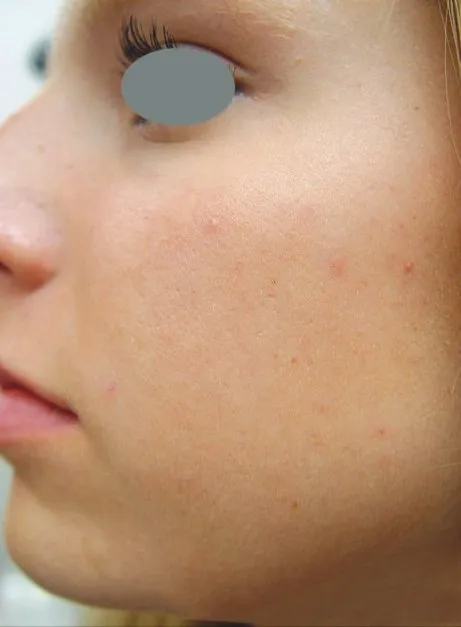
A cluster of inflamed cystic lesions on the cheek with redness spreading around it.
Peels reduce the breakout and the scarring together as texture evens.
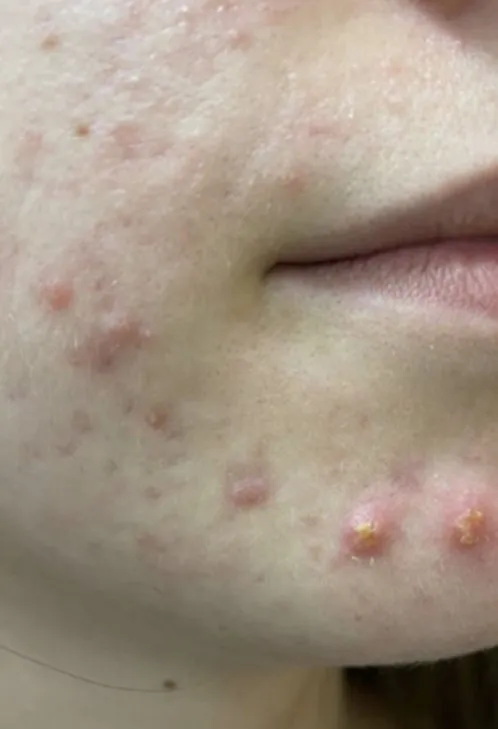
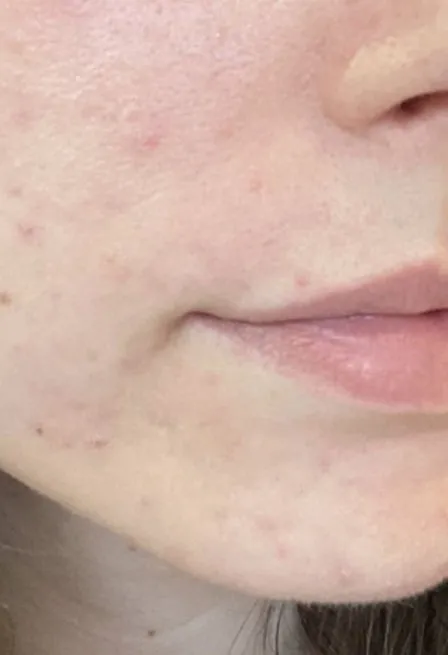
Raised inflamed nodules along the lower cheek and jaw, several of them coming to a head.
Active lesions are treated first; scar work waits until the skin is quiet.
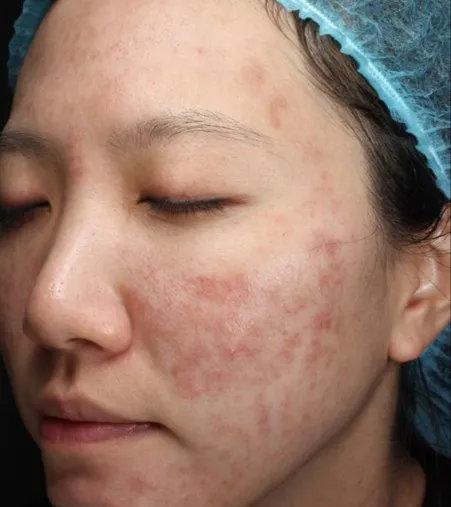
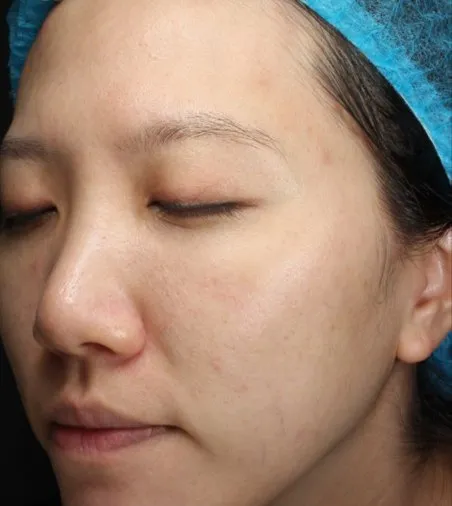
Red papules and marks spread over the whole cheek and up towards the temple.
Laser therapy raises the skin’s own collagen as the lesions settle.
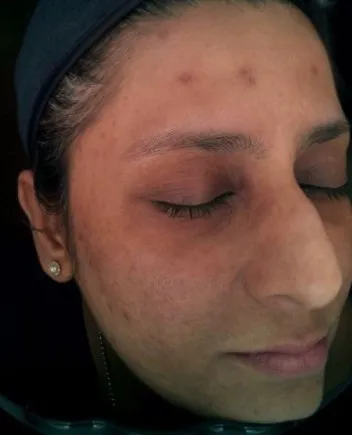
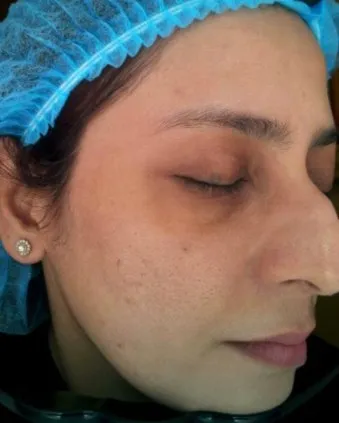
Redness carried across the cheek with acne marks reading through it.
Redness and pigment are treated in the same session rather than in two.
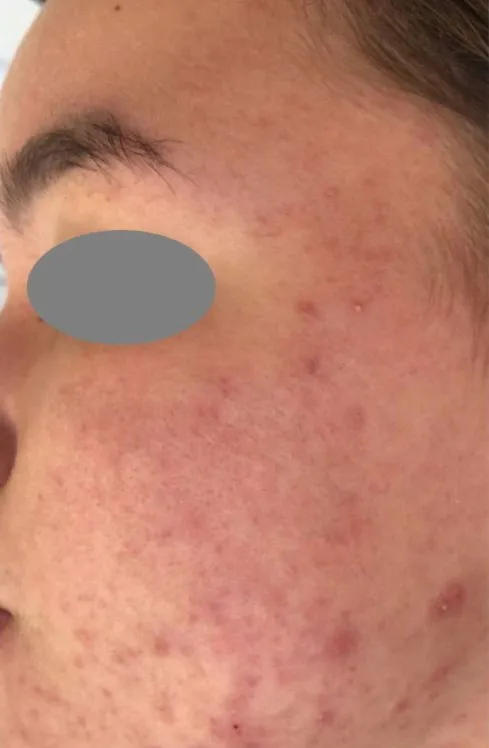
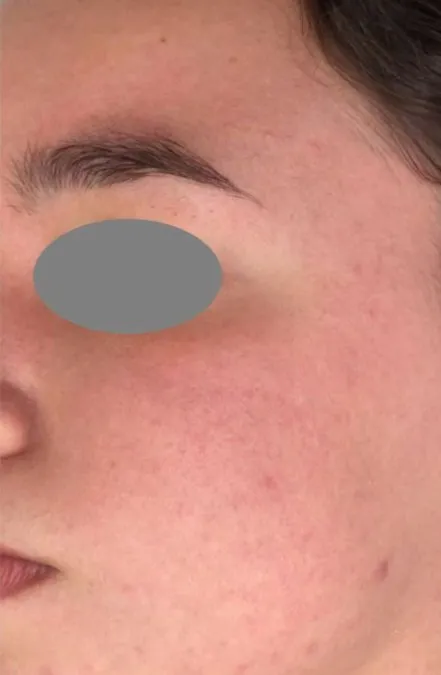
Dense small pitted scars across the cheek and temple with dark marks between them.
Depth is set to the scar, and depth is what sets the recovery.
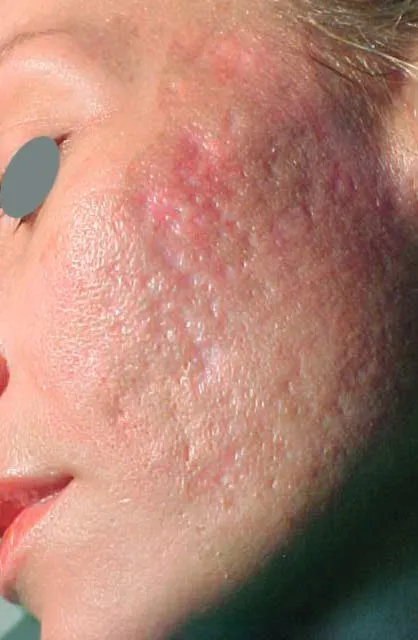
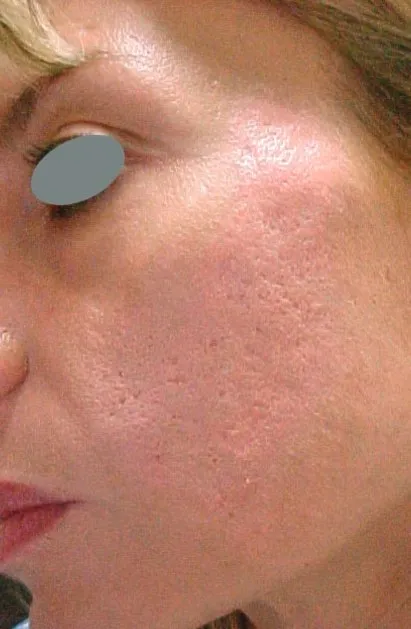
Deep red-purple inflamed scarring massed over the cheek, raised and uneven to the light.
The most inflamed scarring is treated conservatively and over several visits.
What a laser changes about scar revision
Laser revision remodels a scar without cutting, where surgical revision trades one scar for a finer one and a topical works only at the surface. It is one of the Fotona Lasers Dr. Mikki uses on the skin. For patients with broad texture and tone concerns, she may recommend full-face laser resurfacing.
| Feature | Fotona Laser (Medrein) | Surgical Revision | Topical Scar Products |
|---|---|---|---|
| Remodels the scar with no incision | Included | Not included | Included |
| Treats texture and redness together | Included | Varies | Not included |
| Physician assesses each scar type | Included | Included | Not included |
| Works on deeper collagen, not only the surface | Included | Varies | Not included |
Why patients choose laser scar treatment
These reflect common patient sentiment rather than verbatim quotes, and individual results vary.
I had acne scars on my cheeks and a raised surgical scar from years ago, and Dr. Mikki looked at each one separately before suggesting a plan. She was honest that the raised scar would need a careful, staged approach rather than a quick fix. Results may vary, but my cheek texture is noticeably smoother to me.
She treated my acne scarring and an old scar differently, and told me straight what a laser could and could not do.

Frequently asked questions
How does laser treatment improve acne scars?
Laser scar treatment at Medrein runs on the Fotona SP Dynamis. One laser wavelength resurfaces uneven texture from pitted or raised acne scars, and a second heats deeper tissue to remodel collagen and reduce redness. Dr. Mikki performs the treatment and tailors the settings to your scars.
Does this treat scar revision, or only acne scars?
Yes. The treatment covers injury and surgical scars, keloid and hypertrophic scars, burn scars and stretch marks alongside acne scarring. Surgical and traumatic scars can often be softened in texture, color and how visible they are once the scar has matured, and the right timing and number of passes depend on the scar’s age and depth. Each scar type behaves differently, so Dr. Mikki assesses the scar and its history before recommending a laser approach.
Can laser treatment help keloid or raised scars?
Raised and keloid scars are complex and can react unpredictably to treatment, so they are assessed and treated individually. Dr. Mikki reviews the scar, its history, and your skin type, and will say plainly when a laser is appropriate and when another approach or a referral is the honest answer. Results may vary.
How many sessions will I need?
On average four to six sessions are needed for the best results, though your skin type and the type of scar decide the real number. Sessions are spaced several weeks apart so the scar tissue has time to remodel between them, and a single session typically runs 30 to 60 minutes.
Is laser scar treatment safe for darker skin tones?
Skin tone affects laser choice and settings, and pigment-prone skin needs a physician experienced with it to reduce the risk of post-treatment discoloration. Dr. Mikki reviews your skin type and adjusts the approach accordingly. Candidacy is confirmed at consultation.
What are the side effects of laser scar revision?
You may have swelling in the treated area, along with some crusting of the skin and discoloration as it heals. Dryness, irritation, redness or a burning sensation for a few days is also common. These settle over the following days, and Dr. Mikki gives you written aftercare so you know what to expect. Individual results vary.
How long does it take to see results?
Results vary with the treatment used and how severe the scar is. Some improvement can show after a few weeks, but optimal results usually appear after multiple sessions across several months, because scar tissue remodels gradually over time. Results may vary.
Can scar revision be combined with other skin treatments?
Yes. Scar revision can be combined with microneedling, chemical peels, PRP or PRF therapy, or full-face laser resurfacing to improve overall skin texture and tone alongside the specific scar. Dr. Mikki decides the combination and the order at consultation.
Should active acne be treated before the scars?
Yes. Treating scarring while acne is still breaking out means new marks form as fresh lesions heal. The practice clears the acne first, using topical or oral medication, chemical peels or laser therapy on the same Fotona SP Dynamis platform, and revises the scarring once the skin is settled.
Is laser scar treatment right for you?
Dr. Mikki assesses each scar and its history, explains what a laser can realistically do, and confirms candidacy before you schedule.
4.8★ from 128 verified Google reviews