
The BPC-157 and TB-500 Wolverine Stack in Southlake, TX
The Wolverine Stack pairs two regenerative peptides for soft-tissue and joint recovery. Both are given as small subcutaneous injections under medical supervision.
- Google 4.8★
- Yelp 5.0★
Two peptides, one repair protocol
The Wolverine Stack is one of Dr. Mikki's repair peptides, combining BPC-157 with TB-500 in a single course. Each peptide reaches the same recovery goal through a different mechanism, detailed below.
What the Wolverine Stack involves
How BPC-157 and TB-500 each work
Peptides are short chains of amino acids that act as biological messengers. These two carry different messages, which is the whole reason they are prescribed as a pair rather than alone.
| Axis of comparison | BPC-157 (acts at the injury site) | TB-500 (acts systemically) |
|---|---|---|
| What it is | BPC-157:A synthetic peptide based on a protein found in human gastric juice, which is where the name body protection compound comes from. | TB-500:A synthetic form of thymosin beta-4, a peptide the body already produces and already uses in tissue repair. |
| How it signals | BPC-157:Prompts the body to grow new blood vessels into the injured tissue and helps settle the inflammation around it. | TB-500:Acts on actin, the protein that moves cells, so the cells that do the repairing travel to the damaged area. |
| Where it acts | BPC-157:Targeted repair at the injury site, including tendon and ligament tissue that has a limited blood supply of its own. | TB-500:Systemically. It is a small molecule that travels through tissue easily, so its anti-inflammatory effect is full-body rather than local. |
| Most studied for | BPC-157:Healing in muscle, tendon, ligament and the gut lining. Large-scale human trials are still ongoing. | TB-500:Tissue repair and regeneration, reduced inflammation, and helping limit the restrictive scar tissue that forms as an injury closes. |
| Also studied for | BPC-157:Reduces gastric inflammation and helps protect the skin barrier against oxidative stress. | TB-500:Supports the new blood vessels that carry healing nutrients to where they are needed most. |
Why the two peptides are stacked
Dr. Mikki describes the pairing as one peptide building the road and the other directing traffic down it. BPC-157 promotes the new blood vessels that carry oxygen and nutrients into tendons and ligaments, tissue that has a poor blood supply of its own. TB-500 works systemically and coordinates cell migration, so the repair cells arrive at the spot that needs them. Neither one does the other one's job, which is why the combination is used where a single peptide often stalls.
Where the peptides come from matters
A lot of people selling peptides online cannot tell you what is in the vial. Dr. Mikki sources every peptide from reputable compounding pharmacies and reviews your history before the first dose. If your skin or hair is the goal instead, she may point you to the copper peptide track.
| Feature | Medrein Protocol | Online / Gray-Market Peptides |
|---|---|---|
| Sourced from reputable compounding pharmacies | Included | Not included |
| A board-certified MD sets and adjusts the dose | Included | Not included |
| History and candidacy reviewed before the first dose | Included | Varies |
| A realistic recovery timeline set up front | Included | Not included |
What a Wolverine Stack protocol looks like
Consultation with Dr. Mikki
A board-certified physician with 15+ years in medicine and 10+ years in advanced wellness therapies reviews your health and injury history, examines the area, and discusses your recovery goals.
Baseline lab work
A comprehensive metabolic and hormone panel establishes your starting point. Inflammatory markers and IGF-1 are the values she watches once you are on protocol.
Protocol selection
Dr. Mikki chooses between the Wolverine Stack on its own and a broader repair blend such as KLOW, which adds copper and anti-inflammatory peptides alongside it, and she sets your dose and schedule herself.
Subcutaneous injections at home
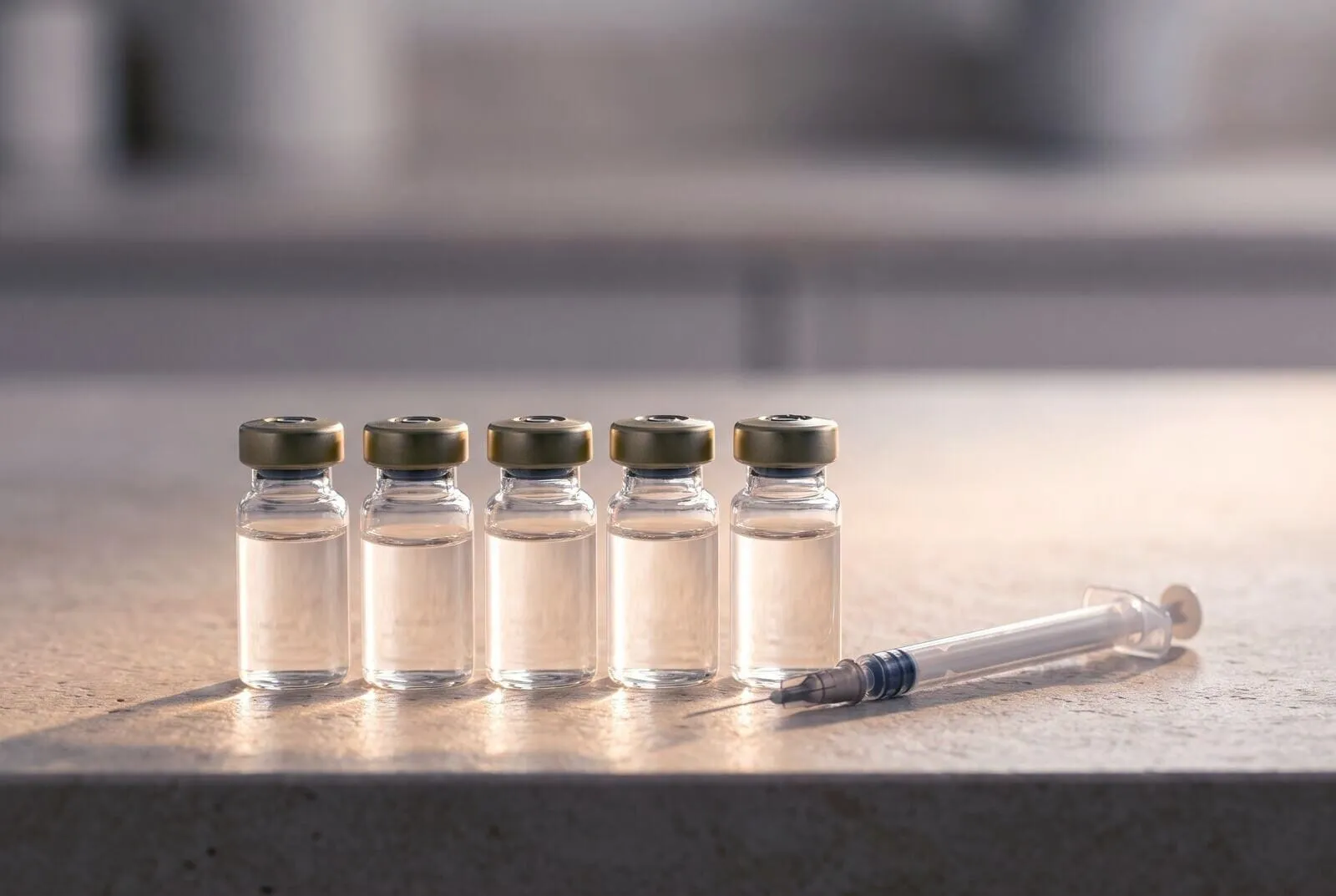
The peptides are given as small subcutaneous injections with an insulin-type needle, usually into the abdomen. Her team teaches you the technique so you can carry the course between visits.
Monitoring and adjustment
Follow-up at two to four weeks, again at six to eight, with repeat lab work around eight to twelve. Response is individual, so she reviews those labs and how you are actually doing at each visit and decides with you whether to hold the dose, adjust it, extend the course or stop.
How much changes, and how quickly, differs from patient to patient. The condition being treated, your age and your activity level all bear on it, and none of it can be promised in advance.
Peptide therapy safety and side effects
How the protocol is supervised
- Both peptides are prescription-only, and Dr. Mikki writes the prescription herself.
- They are prepared by licensed 503A compounding pharmacies, not bought as unregulated research chemicals.
- Dr. Mikki reviews your health status and goals before anything is prescribed, draws baseline blood work first, and rechecks inflammatory markers and IGF-1 while you are on protocol so the plan can be adjusted.
- Injections use small insulin-type needles, and her team teaches the technique before you give one on your own.
Possible side effects
- Redness or irritation at the injection site.
- Water retention.
- Tingling in the joints.
- Reported side effects are usually mild and uncommon, but tell Dr. Mikki about anything new rather than working through it.
- Neither peptide is an FDA-approved drug. Both are prescribed off-label and compounded, and large-scale human trials are still ongoing.
Who the Wolverine Stack is for
Dr. Mikki confirms candidacy at consultation against your history and your goal, and she will point you elsewhere when something else fits better, whether that is skin and hair, cellular energy, or the hormonal foundation underneath the repair. Both sides of that decision are below.
A good fit
- Chronic tendinopathies and ligament injuries that have not improved with conventional treatment.
- Acute orthopedic injuries: muscle tears, ligament sprains, tendon damage.
- Athletes looking to recover faster between training sessions.
- Patients recovering from surgery, or from a wound or skin injury that is closing slowly.
- Persistent gut health issues or chronic inflammatory conditions.
- Active adults whose joint discomfort is limiting their lifestyle.
Not the right treatment
- Anyone with an active malignancy or a history of cancer. These peptides promote new blood-vessel formation, and that makes this a firm contraindication.
- Pregnancy, retinopathy, or anyone under 18.
- Competitive athletes in a tested sport, since both peptides sit on the 2026 WADA Prohibited List.
- Pain that comes from nerve compression rather than soft tissue. The stack supports the tissue around a nerve; it does not decompress one.
- Anyone hoping to skip the diagnosis. If an injury needs imaging, an orthopedic opinion or physical therapy, Dr. Mikki will say so.
Three things to be clear about before you start
- BPC-157 and TB-500 are not FDA-approved medications. They are prescribed off-label by a physician and prepared by a licensed compounding pharmacy, and human research on both is still ongoing.
- Peptides support the repair your body is already attempting. They do not replace a diagnosis, imaging, or the physical therapy an injury may need.
- Change is measured in weeks rather than days, and individual responses vary based on the condition being treated.

Other Repair & Healing peptides
Glow Complex (GHK-Cu / TB-500 / BPC-157)
This repair pairing with GHK-Cu added, for skin, hair, and nails alongside recovery.
KLOW Peptide Blend
A combination blend that adds KPV to the Glow Complex of copper and repair peptides.
Therapies patients often run alongside it
The Wolverine Stack is often run alongside other regenerative work at Medrein Health: PRP and PRF for tissue repair, NAD+ therapy for cellular energy, and hormone optimization where the foundation underneath the repair needs attention first. Dr. Mikki sequences them into one personalized protocol rather than starting everything at once.
Why patients choose supervised peptide therapy
These reflect common patient sentiment rather than verbatim quotes, and individual results vary.
I came in after a nagging shoulder injury that would not settle. What stood out was that Dr. Mikki explained what BPC-157 and TB-500 actually do before we started, and she was upfront that recovery would take weeks, not days. Results may vary, but I appreciated being treated like a patient rather than a sale.
She started me low and adjusted the dose when I plateaued. No hype, just a plan she checked on.

Frequently asked questions
What is the Wolverine Stack?
The Wolverine Stack pairs two regenerative peptides, BPC-157 and TB-500, in one recovery-focused protocol. It is named for the comic character's rapid healing. Both peptides are studied for tissue repair, and Dr. Mikki prescribes them together for soft-tissue and joint recovery under medical supervision.
What is the difference between BPC-157 and TB-500?
BPC-157 is a body-protection compound studied for tendon, ligament, and gut-lining repair and for new blood-vessel formation. TB-500 is a thymosin beta-4 fragment studied for cell migration and tissue flexibility. They target the repair process through different mechanisms, which is why they are used as a pair rather than alone.
How is the Wolverine Stack given, and how often?
The peptides are given as small subcutaneous injections. Dr. Mikki sets your frequency and dose at consultation based on your injury, your history, and how you respond. There is no single dose that fits everyone.
How long does it take to see results from BPC-157 and TB-500?
Response varies from patient to patient, so Dr. Mikki does not set a timeline before she has examined you. The condition being treated, your age, your activity level and how consistently you follow the protocol all bear on it. She sets expectations with you at the consultation, reviews your labs and your symptoms at follow-up around two to four weeks and again at six to eight, and decides with you from there whether to continue, adjust or stop.
Where do the peptides come from, and is the protocol supervised?
Every peptide is sourced from reputable compounding pharmacies, never a gray-market supplier. Many sellers online cannot tell you what is in the vial. Dr. Mikki, a board-certified MD, reviews your history, sets the protocol, and monitors you throughout.
Am I a candidate for the Wolverine Stack?
Candidacy is decided at consultation. Ideal candidates include athletes recovering from injuries, people with chronic soft-tissue problems, patients healing from surgery, and those looking to support gut health. Dr. Mikki reviews your recovery goals, relevant history, and any medications first, and she will say plainly when peptides are not the right tool for your situation.
Is BPC-157 and TB-500 peptide therapy safe?
Safety depends on physician supervision and an individual health assessment. Both peptides are versions of peptides the body already makes, and Dr. Mikki conducts a thorough evaluation before treatment to confirm peptide therapy suits your health status and goals. Reported side effects are usually mild, most commonly injection-site redness, water retention, and tingling in the joints. It is contraindicated for anyone with an active malignancy or a cancer history, in pregnancy, with retinopathy, or under 18.
Are BPC-157 and TB-500 FDA-approved?
No. Neither peptide is an FDA-approved drug. Both are prescription-only, prescribed off-label by a physician, and prepared by licensed 503A compounding pharmacies. That is a different thing from the unregulated research chemicals sold online, which are not intended for human use and are not tested for purity, sterility, or dosing accuracy.
Can I combine the Wolverine Stack with other treatments at Medrein Health?
Yes. Many patients pair peptide therapy with PRP and PRF treatments, NAD+ therapy for cellular energy, or hormone optimization for broader wellness support. Peptides tend to work best when the hormonal foundation underneath them is stable, so Dr. Mikki builds a personalized protocol rather than adding treatments one at a time.
Is the Wolverine Stack right for your recovery?
Dr. Mikki reviews your injury and history, sets a conservative starting dose, and confirms candidacy before you begin.
4.8★ from 128 verified Google reviews